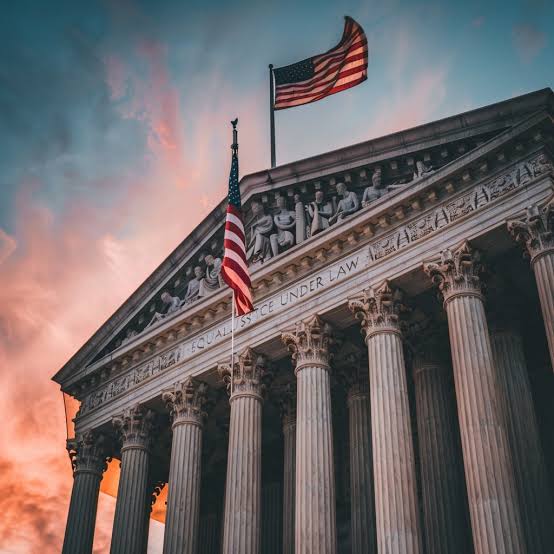
It’s pretty warm for the end of October in northern Illinois. The skies are overcast and spitting a little rain as I drive up Somonauk Avenue in my small town lined on both sides with old Victorian designed homes built in the 19th century. My trusty sidekick Blu is riding shotgun, peering out of the windshield, constantly vigilant for any intruders in need of a good barking. A man walks his dog one one side of the street while a young mother pushes a baby carriage on the other. I’m headed to the county legislative center to do early voting in order to avoid possible long lines on November 3. I slowly drive by the old courthouse with a flag flying over the top. Every time I drive this way and spy the flag I am reminded of the lyrics from Bruce Springsteen’s Long Walk Home song released in 2006 on his Magic album: “That flag flying over the courthouse, means certain things are set in stone, who we are, what we’ll do and what we won’t”.
In 2006, Springsteen took aim at the Georg W Bush administration’s concepts of extraordinary rendition, black sites, the use of waterboarding and torture in enhanced interrogations, and invading a country that had nothing to do with the attacks of September 11. At the time, I never thought at some future point, these actions would be mere child’s play when it comes to a presidential administration. The stoplight turns red and I turn the corner into the parking lot near the early polling location. Most of the spaces are taken but I slide into one of the few open slots, put the car in park, leave the motor running and tell Blue, “I’ll be right back. Don’t go anywhere. And don’t talk to any strangers.”
As I approach the door, a vague memory crosses my mind of being six or eight years old and entering the polling station with my dad at the fire station right down the street from our little neighborhood. Our dad is busy, working early and late at our family restaurant everyday and doesn’t take me with him very often That’s probably why this memory has stuck with me all this time. It’s early in the morning. He must be taking me with him and then dropping me off at school afterwards. Two or three huge firetrucks are backed into their stalls. I can smell gasoline and the polish used to keep the trucks shiny and gleaming. Dad tells me to stand by the door but don’t go anywhere. I see him pickup a piece of paper, head into a small stall with a red, white and blue striped cloth curtain which he closes. The six year old me has no idea what’s happening or what he’s doing but it must be important if he’s bringing me with.
A woman’s voice snaps me back to the present. “You coming in?”, she asks as I see her holding the door open with a smile on her face. “Yes ma’am”, I reply as I hurry towards the door.
“Thank you very much”, I say as I walk past the threshold nodding my head in her direction.
“You’re welcome”, she replies as she walks towards her car.
I enter the polling room in a non descript room with government issued gray carpeting, two long buffet tables with 3 workers behind each table busily shuffling papers and typing on keyboards and several smaller tables with dividers set up for voters. I stop and wait in line behind two others. It’s busy but not overwhelming. One of the volunteers calls me over to her station and asks me my name. She asks,” Would you like a tablet or paper ballot?”
“You’ll have to take my paper ballot out of my cold dead hands” I joke in reply.
She smiles and hands me a ballot covered with a paper jacket for privacy. I make my decisions one by one and mark my choices with a cheap Bic black ink pen, I hate black ink. I walk over and feed my ballot into the voting machine. Roughly 4500 people have voted according to the tracker on this unit. I ask one of the workers if it’s been busy so far and she says it’s been steady everyday, busier than in years past.
As I head back to my car, I open the door as an older couple approach. They are holding hands and smile at me as I hold the door for them. “Thank you young man,” the lady says to me.
I approach the van and can see Blue’s snout as she peers over her seat searching for me. I wonder to myself if any strangers talked to her through the door window. If they did, she wouldn’t have been happy about it.
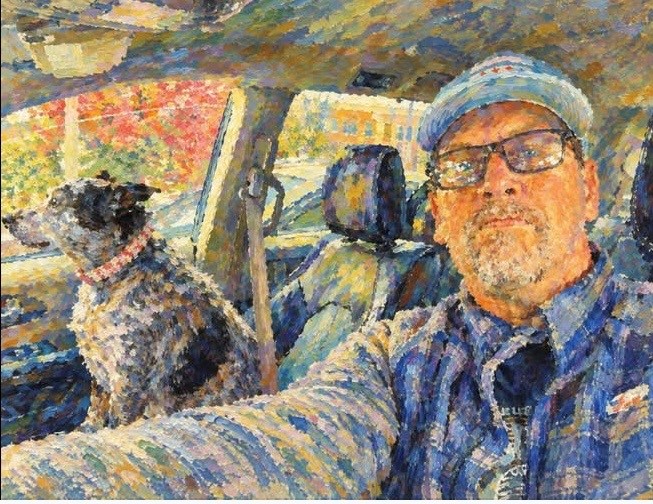
One my way back home, I take another look at the flag flying over the courthouse. A woman stands on the sidewalk to my right waiting to pass though a crosswalk. I stop and wave her across. She waves at me and I can hear her say thanks as I wave back, both hands at the top of the steering wheel. I know I am often times naive, but I think to myself, “Why can’t our country be more like these last few minutes: people, fellow citizens crossing paths, being kind to one another, showing basic manners, niceties and decency to one another as we go about our business. Holding doors for one another, saying thank you and you’re welcome, letting people cross from one path to another in safety, sharing a few words, in essence making things a little bit better for each other.
There will always be political differences, differences of opinions, how we see the country and the world, what’s best and how to get there. But there doesn’t need to be cruelty for cruelties sake. There doesn’t need to be ugliness, a disregard for anyone who doesn’t agree or a naked need for there to be winners and losers in the equation. What we need more of is basic human decency, compassion, care and concern. It’s really not that hard.
A car behind me honks and I glance in the rearview mirror to see the driver throwing up their hands in the air as if to say, “Go you moron.” At least that’s what I would have said if I was driving that car.
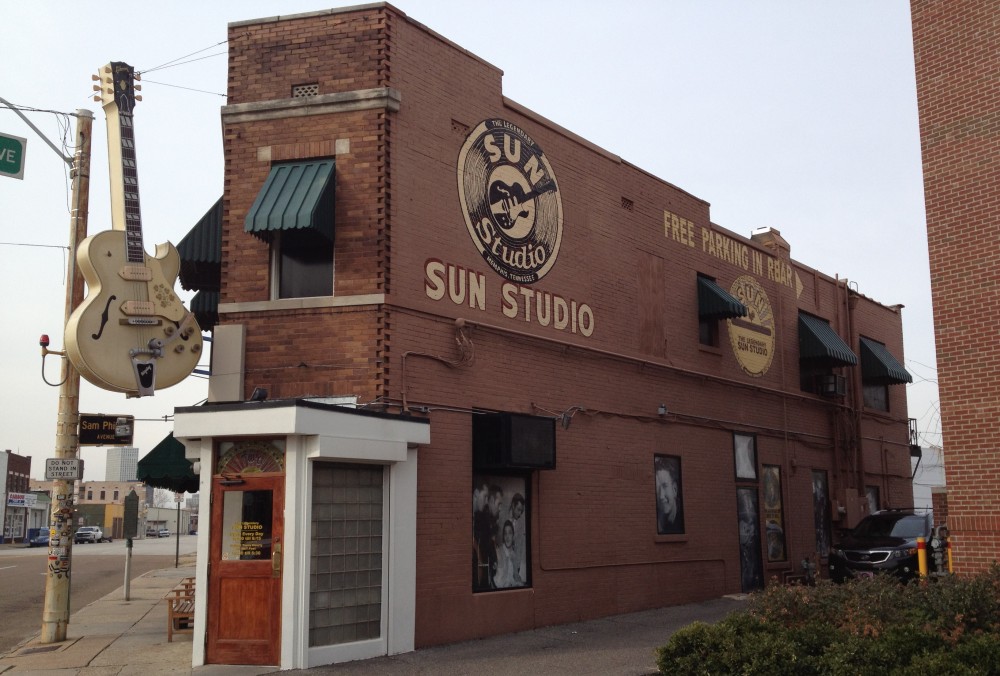
As we head into a critical state and national election to determine the next few years of our nation, I am reminded of Robert Kennedy’s speech on April 4, 1968, the day Martin Luther King Jr was killed in Memphis. Bobby was on the campaign trail in Indianapolis, Indiana that day. His advisers told him not to speak that night at a planned stop fearing violence that had erupted in many major cities that day when people heard the news. Bobby disregarded his staff knowing people were there to see him and hear him speak. In the cold night, Bobby climbed up onto a flatbed trailer with a few spotlights shining down on him and said these words which were just as important then as they are now.
“What we need in the United States is not division; what we need in the United States is not hatred; what we need in the United States is not violence or lawlessness; but love and wisdom, and compassion toward one another, and a feeling of justice toward those who still suffer within our country, whether they be white or they be black.
So I shall ask you tonight to return home, to say a prayer for the family of Martin Luther King, that’s true, but more importantly to say a prayer for our own country, which all of us love–a prayer for understanding and that compassion of which I spoke.
We can do well in this country. We will have difficult times; we’ve had difficult times in the past; we will have difficult times in the future. It is not the end of violence; it is not the end of lawlessness; it is not the end of disorder.
But the vast majority of white people and the vast majority of black people in this country want to live together, want to improve the quality of our life, and want justice for all human beings who abide in our land.
Let us dedicate ourselves to what the Greeks wrote so many years ago: to tame the savageness of man and make gentle the life of this world.
Let us dedicate ourselves to that, and say a prayer for our country and for our people.”
Amen Bobby. I’ll say a prayer tonight for our country and for my fellow Americans. Hopefully at the same time, someone on the other side of the political spectrum says a prayer for me and you and all of us. We can use it.