Lincoln The Movie: Weariness Has Eaten At My Bones

By Ryan Hilligoss, November 2012

“My brother need not be idealized, or enlarged in death beyond what he was in life; to be remembered simply as a good and decent man, who saw wrong and tried to right it, saw suffering and tried to heal it, saw war and tried to stop it. Those of us who loved him and who take him to his rest today, pray that what he was to us and what he wished for others will some day come to pass for all the world. As he said many times, in many parts of this nation, to those he touched and who sought to touch him: ‘Some men see things as they are and say why. I dream things that never were and say why not.” Edward Kennedy in his eulogy to brother Robert F Kennedy, June 1968.

Abraham Lincoln Memorial, Washington DC

Since Abraham Lincoln’s death in April of 1865, no other person in American history, or world history perhaps, has been more enlarged in death beyond what he was in life. Many scholars claim that Lincoln has had more books and words written about him than any other person in history, only behind Jesus, George Washington and Napoleon Bonaparte. Well, here are a few more words, written by two boys from the Land of Lincoln.

The above photo speaks volumes to what has happened to Lincoln since his death. He has been turned into a world-class icon, symbol of justice, freedom and righteousness, and a demigod. Like a greek deity,  literally chiseled in granite, he sits in his own temple high on the mountaintop gazing over the nation. And how could it not since probably more than any other, Abraham Lincoln’s life stands as testament to the possibilities of this country. Lincoln himself said, “I happen temporarily to occupy this big White House. I am living witness that any one of your children may look to come here as my father’s child has.”

Abraham Lincoln as a boy reading by firelight

On February 12, 1809, he was born in a one room log cabin in the rural wilderness of Kentucky in Hardin County to Thomas and Nancy Lincoln. His father quickly moved to the backwoods of Indiana, partially to remove his family and farm from the slavery environment which Thomas thought he could never compete against slavery plantations with their free labor. When he was nine, Abraham’s mother died of milk poisoning. Thomas Lincoln left his two young children alone to fend for themselves to survive the harsh conditions of wintry Indiana while he went off to find a new wife. The two children barely survived the arduous conditions but were greeted the following spring by the return of his father who had married Sarah Bush Lincoln, a widow with three children of her own. Abraham quickly took to his step mother and thrived emotionally and intellectually under her attentions including literacy. Abraham attended school sporadically due to both a lack of rural schools and his father’s need for him to work on the farm. Lincoln often claimed he worked with an axe cutting wood everyday of his life from between the ages of four and twenty-five. He was self-taught and read every book he could beg or borrow from neighbors including the King James Bible, Aesop’s Fables, Robinson Crusoe and Ben Franklin’s Autobiography. Thomas Lincoln moved his family to Illinois and Abraham helped his father build another log cabin near Charleston, Illinois.

Thomas Lincoln homestead and log cabin, Coles County, Illinois, near Charleston

Twice, he barely avoided death, once being kicked in the head by a horse and secondly, nearly drowning while crossing a flood swollen creek. At the age of twenty-two, Lincoln ‘lit out for the territories’ seeking his own stake in the world and floated down the Sangamon River and ended up in New Salem, Illinois, twenty miles from Springfield. From there, he quickly rose from the squalor of abject poverty by owning a general store, serving as captain in the Illinois militia during the Black Hawk War, self-learning the law and passing the bar, and serving in the Illinois State Assembly while developing a successful law office in Springfield.

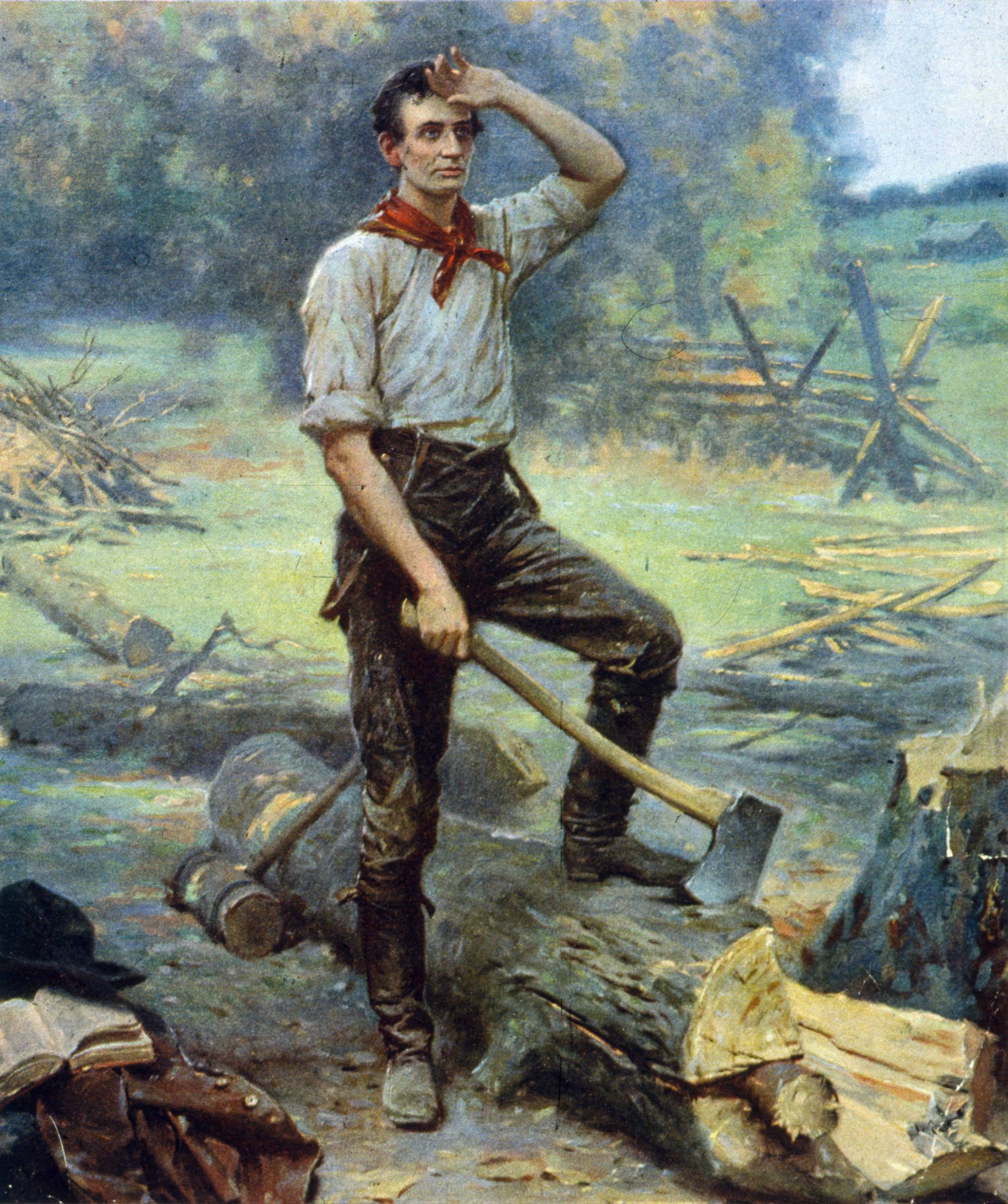
The Rail Splitter, young Abraham Lincoln

But as a native-born son of Illinois, the Land of Lincoln as it says on our license plates, I can attest to a slightly more intimate relationship with Old Abe, the Rail Splitter. For I have travelled in his footsteps, both knowingly and simply by perchance in living my life in all it’s stages. I was born in Springfield, Illinois and have spent a good amount of time over my lifetime in that city, home of the Abraham Lincoln Presidential Library and Museum, the national Park Service Lincoln Home, the old state capitol in which Lincoln served and debated, and the Lincoln Tomb and Memorial. I was raised and went to school in the Mississippi River town of Alton, Il, site of one of the famous Lincoln Douglas debates of 1858. Alton was also the location of Lincoln’s “victorious” duels.

In 1842, James Shield’s the Auditor of the state of Illinois, confronted Lincoln at a local tavern in Springfield about a series of “Letters to the Editor” in the Sangamon Journal, which were signed by Rebecca.  Shields accused Mary Todd of writing the letters which impugned his reputation.  Lincoln brushed Shields aside by proclaiming that he had written said letters.  Shields challenged Lincoln to a duel.  Lincoln tried his best to convince Shields that dueling was unreasonable, asking him to “belly up to the bar, and settle this through conversation.”  Shields insisted, a date and place agreed upon, dueling was illegal in Illinois.  The duel was to occur on the Missouri side of the Mississippi River, on Sunflower Island.  They may have ridden the same train to Alton, and again Lincoln tried to appeal to Shields’ common sense and to call the duel off.  Shields refused.

They rowed out to Sunflower Island and when Lincoln was asked as to his choice of weapons, he surprisingly chose broadswords.  Lincoln took his sword and went beneath a maple tree where he commenced to warm-up, swing the heavy sword as a well experience rail-splitter would, sending leaves, twigs, and branches flying in every direction.  Shields stood by watching Lincoln’s pre-duel antics, and was struck by the fact that Lincoln had an obvious advantage. Shields approached Lincoln, advised he had reconsidered and decided that just maybe “they should return to Alton, find an agreeable saloon, and settle their disagreeable argument over a drink.  Lincoln agreed.

During our college years, we both attended Eastern Illinois University in Charleston, Illinois. We once visited the Lincoln Homestead south of town and travelled the same roads as Lincoln did, he on horseback, us in an automobile riding in quiet, smooth comfort.  Lincoln rode by horseback through the same fields our family plowed while serving as a prairie lawyer. Twice a year for 16 years, 10 weeks at a time, he appeared in county seats in the mid state region when the county courts were in session. Lincoln handled many transportation cases in the midst of the nation’s western expansion, particularly the conflicts arising from the operation of river barges under the many new railroad bridges. As a riverboat man, Lincoln initially favored those interests, but ultimately represented whoever hired him. His reputation grew, and he appeared before the Supreme Court of the United States, arguing a case involving a canal boat that sank after hitting a bridge. In 1849, he received a patent for a flotation device for the movement of boats in shallow water. The idea was never commercialized, but Lincoln is the only president to hold a patent. Our paternal family came from the farms of northern Coles County, many living in and around the small town of Humboldt, Illinois. During a return trip to Springfield, after visiting his stepmother south of Charleston in the early 1850’s, Lincoln stopped in Humboldt, Illinois to have an aching tooth looked at by Dr. Wampler.  Dr. Wampler extracted the tooth and Lincoln went on his way.

Prairie Lawyer Abraham Lincoln, 1850


Walking the same sidewalks and streets he walked in Springfield, driving the same roads he travelled in Coles County and being from the same area gives one a little sense of what he was like and his personal background, the terrain of his character. So, he seems a little more real and of the land than perhaps someone from another country visiting our nation’s capitol and taking in his marble visage at the memorial on the mall. Each and every one of us has defining moments in our lives. Moments that in a split second, strike with a clarity and the power of lightning which you carry for the rest of your lives. One of my moments concerned Lincoln and proved that he was just a man. A man who was not adored and revered by all as I had incorrectly assumed. He was a real man, loved my many and hated by many. A man filled with the same frailties and failings of humanity as the rest of us, not some deep voiced spirit from on high.

While on a road trip with my father, brother and cousin, we visited the Gettysburg national battleground and cemetery in southeastern Pennsylvania. We also did some shopping in the myriad gift shops around town (There’s nothing quite like seeing a Chevrolet Auto dealer sitting next to Civil War monuments. Although I always thought US Grant was a Ford man). After walking into a store, I overheard the owner tell a customer that as a southerner, she was glad Lincoln was shot and killed as a repayment for all the crimes he had committed against the south. To say the least, I was stunned, dumbfounded and shocked to my core because of all the meanings inherent in that statement. This explains part of what happened shortly thereafter. There had been a Civil War battle reenactment going on that week on the same fields that thousands had died upon back in 1863, so there were reenactors in full battle gear and dress walking the streets. As we drove through town on our way home, four confederate soldiers were walking down a sidewalk, and in a fit of rage brought on by the store owner, I rolled my window down, stuck my head through the opening and yelled at the flabbergasted actors, “The south lost you assholes, get over it!!!!!!”

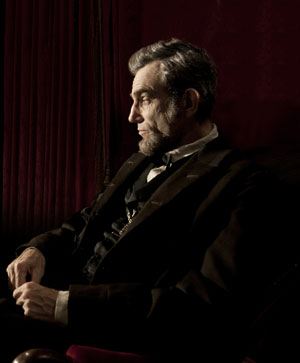
Daniel Day-Lewis as Abraham Lincoln

The Movie: 5 Stars Out of 4(Yes, you read that right)

More recently, our nation’s finest president has been shown to have been an earthly manifestation again and brought to life before our eyes in Steven Spielberg’s superlative movie, Lincoln. Lincoln is portrayed by modern-day shape shifter, Daniel Day-Lewis, who has a habit of living and breathing in character, on and off the set during a project, much like Robert Deniro did when he gave a damn, ie as Jake Lamotte in Raging Bull. The movie has a great script by Tony Kushner. Great acting all around including David Straitharn as Secretary of State William Seward, Sally Fields as long-suffering Mary Todd Lincoln, Joseph Gordon-Levitt as Robert Todd Lincoln and James Spader as a 19th century political consultant brought in to procure badly needed votes in the House of Representatives.

Kushner, the writer of Angels in America and Munich among many others, originally wanted to write a biopic on the 16th president’s entire life, but he and Spielberg realized it would be nearly impossible to film such a project, instead focuses the script on the four months in 1865 between the passage of the 13th amendment, the end of the Civil War and Lincoln’s assassination. He uses Doris Kearns Goodwin’s Team of Rivals as the basis for much of the film. The 13th amendment abolished slavery and indentured servitude, except as punishment for a crime. Lincoln had issued the Emancipation Proclamation in 1863, but it was issued as an executive order and did not carry the legal authority to abolish slavery in itself, only prohibiting slavery in the confederate states. Lincoln and many others wanted to make the measure permanent and sought constitutional remedy through the amendment.

There were three scenes in the film that clearly allow the viewer to see Lincoln at some of his most humanistic, personal and intimate moments. All three involve his young son Thomas, better known as Tad, and all three come at critical moments in the film and in the story. And that is why I give the film more stars than possible. No only is it a great film made possible by fine actors, great writing, directing, cinematography, music score, etc. But in addition, Day-Lewis, and by extension Spielberg, breathes fresh life into a man who has been canonized all around the world. This Lincoln walks straight out of the history books and off his lofty perch, and we see him as he was in life talking to his cabinet members, joking and telling stories with young soldiers in the war room and riding in a buggy with his wife talking of all the places they would travel once they retired from public office.

Abraham Lincoln and son Thomas, Tad, 1865

One of the opening scenes shows 12-year-old Tad sitting by a fire in his room in the White House looking at photographs, taken by famous Civil War photographer Mathew Brady, of slave children. One shows two young African boys, roughly the same age as Tad, standing together in chains, with the price of $700 at the bottom of the frame. While thinking this over in his mind, Tad falls asleep on the rug amongst his toys, and soon after, father Abraham enters the room, kneels down and sweeps away the toys and lays down next to his sleeping son and gazes at his face. He soon wakes the boy who, after rising, climbs up his father’s back for a piggyback ride down the hallway.

As the second act unfolds amidst the drama of the 13th amendment being debated in the House assembly, father and son sit in a quiet room in the White House in a rocking chair together reading a book. The sunlight cascades through the window and curtains bathing the two of them in a heavenly, timeless light. If the viewer closed their eyes, they could picture this scene in their mind as having been lifted right out of a photograph from that time.

In the final and dramatic act of which every viewer knows the ending, the trilogy of interchanges between son and father comes to a close. Robert E Lee surrendered to General US Grant on April 9th, 1865 at Appomatox, Va, bringing the American Civil War to a close. Five days later, on the night of April 14th, 1865, Good Friday,  Abraham and Mary Lincoln went to see Our American Cousin at Ford’s Theater. Young Tad went to see a different play that same night, Aladdin and the Wonderful Lamp. After the assassination at Ford’s, the news spread quickly through town, and Tad’s play was interrupted with a stage manager announcing the news to an astonished crowd. Upon hearing that his father was shot, Tad broke out into sobs of grief and was consoled by hisassigned escort. In that moment of grief, you can see in that little boy’s face that yes, the nation had lost their president and their leader through the country’s worst times, but this little boy had lost his all too real father.

Once Lincoln passed, Secretary of War, Edwin Stanton, uttered, “Now he belongs to the ages.” (The exact words he said are debatable as some remember him saying, “Now he belongs to the Angels.”) And the country quickly put him onto a pedestal as a revered gift from above. But, as for Tad and Robert, they would miss their father, and Mary would miss her husband. Later, Tad stated on the death of his father, “Pa is dead. I can hardly believe that I shall never see him again. I must learn to take care of myself now. Yes, Pa is dead, and I am only Tad Lincoln now, little Tad, like other little boys. I am not a president’s son now. I won’t have many presents anymore. Well, I will try and be a good boy, and will hope to go someday to Pa and brother Willie, in heaven.”

Abraham Lincoln draped in flag

Coda

Near the end of the movie, there is an indelible scene between Lincoln and US Grant as they sit on the front porch of a house in Virginia. Lincoln confers with Grant on how to handle the surrender with Lee, and Lincoln also gives his wishes on how to treat the confederate soldiers and to send them home to their families and farms, ‘with malice towards none.’ After speaking,  Grant takes in Lincoln’s features and tells him that he looks like he has aged 10 years since they saw each other last one year ago. Never one to concern himself much with his appearance,  Lincoln chuckles and states, ” Yes, I suppose weariness has eaten at my bones.” Indeed, if you look at pictures from that time, you can see a marked difference in his features between taking office in 1861 and his death four years later. It is as if time accelerated and he took on the weight of the nation during those years. Lincoln would often travel to the Soldiers’ Home in Washington and visit the returning injured soldiers and spend time with them. He would go to the War Room and wait for news of the latest battles and the fatality numbers to pour across the telegraph wire. But more importantly and most stressful, he weighed over every decision on how best to end the war, end the issue of slavery that had and still does plague this nation, and ‘bind up the nation’s wounds.’

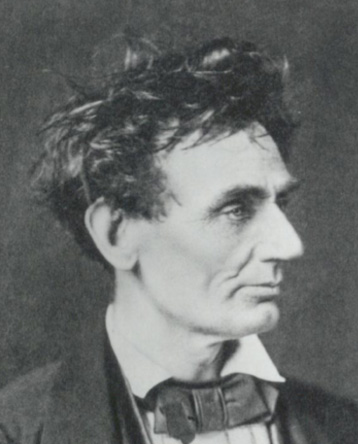
Abraham Lincoln, 1865

“With malice towards none; with charity for all, with firmness in the right as God gave us to see the right, let us strive on to finish the work we are in; to bind up the nation’s wounds; to care for him who shall have borne the battle; and for his widow, and his orphan- to do all which may achieve and cherish a just, and a lasting peace, among ourselves, and with all nations.” Abraham Lincoln, second inaugural address, 1865.

Abraham Lincoln’s funeral hearse

Postscript

While watching the movie and in doing some research for this piece, I was reminded several times of Robert Kennedy’s speech on the night of April 4, 1968 and the echoes of Lincoln’s own words and the lasting causes and effects of the Civil War that we still deal with to this day. In 1968, amidst tumultuous times including the war in Vietnam, unrest on college campuses, race riots, and incredible changes in society, Robert Kennedy decided to run for president and began campaigning across the nation. On April 4th of that year, Martin Luther King, Jr was assassinated in Memphis, Tennessee while he stood on the balcony of the Lorraine Motel. Riots broke out across the country in many cities as the news spread. Kennedy had been scheduled to give a speech in Indianapolis that night and heard the news after his plane landed that night. The police department and his advisors warned against him going, but Kennedy, who was never deterred from doing what he thought was the just, proper thing to do, went anyway.

Kennedy delivered the news that night to the crowd, many of whom were not yet aware of the situation, and then gave one of the most touching, decent speeches of his or anyone’s career. His words still ring out today and point to the further decay of our political differences and inability to take action to solve problems facing all of us here in America and around the world. “What we need in the United States is not division; what we need in the United States is not hatred; what we need in the United States is not violence or lawlessness; but love and wisdom, and compassion toward one another, and a feeling of justice toward those who still suffer within our country, whether they be white or they be black.” Below you can watch the entire speech.

http://www.youtube.com/watch?feature=player_embedded&v=_E3-_z5YP0M

By Ryan Hilligoss and Robert Lee Hilligoss

God Bless You Mr.Vonnegut; So it goes and so he went

By Ryan Hilligoss, November 2012

“Where is home?  I’ve wondered where home is, and I realized, it’s not Mars or someplace like that, it’s Indianapolis when I was nine years old.  I had a brother and a sister, a cat and a dog, and a mother and a father and uncles and aunts.  And there’s no way I can get there again.” Kurt Vonnegut, 2005

“We are what we pretend to be, so we must be careful what we pretend to be.” KV

11/11/2012

Today is Armistice Day. Did you know that? No, this is Veterans’ Day some will say. Well yes, it is Veteran’s Day on my calendar, but this date , November 11 used to be called Armistice Day. Armistice Day (which overlaps with Remembrance Day and Veterans Day) is celebrated every year on 11 November to commemorate the armistice signed between the Allies of World War I and Germany for the cessation of hostilities on the Western Front of World War I, which took effect at eleven o’clock in the morning—the “eleventh hour of the eleventh day of the eleventh month” of 1918. In many parts of the world, people observe two consecutive minutes moment of silence at 11:00 a.m. local time as a sign of respect in the first minute for the roughly 20 million people who died in the war, and in the second minute dedicated to the living left behind, generally understood to be wives, children and families left behind but deeply affected by the conflict.

So things change, what else can they do? Millions of people are born on this day and every other day. Today, some people go to church and some boys and girls play soccer games at the local YMCA. Some kids dream of a pony named Snowflake and imagine the rush of wind in their hair on a cool spring day as they trot around a dusty barn. Some people serve in the military and now sit huddled against a mountain top somewhere in a far off land, hiding from the bitter cold and enemies they don’t know. Some people die. What else are we to do? So it goes.

Two people I know, both great Americans in their own rights, celebrate their birthdays today. One is my wife, Kimberly Rae Renner Hilligoss. Kimberly was born a baby girl in 1974 in Geneva, Il, a quiet town in northern Illinois along the Fox River. She was the second born that day in the same little dusty hospital room. No one knew there were twins in there; not mom, not even the doctor. One came out and the doctor, said, “Uh oh.” And mom, in enough distress already, said, “What the hell do you mean, uh oh?” And out came baby Kim. What a surprise. Isn’t that nice? Her dad worked for the United States Postal Service. Her mom  gave nice, older ladies blue perms in a nice home on a quiet, tree-lined street. When baby Kim was brought home from the hospital, a bird in one of those trees in front of that nice house said, “Poo-tee-weet?” What else can it say?

The other great American born on this date is Kurt Vonnegut: free speech activist, humanitarian, free-thinker, humanist, anti-war advocate, artist, painter, and author. I know I earlier said, two people I know were born on this date, and you are probably saying to yourself, “You knew him, personally? What was he like? Did he talk like he wrote? Did he have bushy eyebrows like in his pictures?” You are right, I did not know him personally. Thanks to his beloved Pall Malls he smoked everyday, and thanks to time and distance, I never got the chance to meet him in person, but I did get to see him give a lecture once 10 years ago at a Chicago area college. I remember he gave a long, winding story about seeing innumerable tragedies in this life and then, upon passing, going to the pearly gates and asking St.Peter, “What was the good news and what was the bad news?”

But, I feel like I know him. I feel like he is a friend of mine, at least in some regards. I read once that the sign of a good book is that when you as the reader are done with a book, you feel like you are fiends with the author, and you feel like picking up the phone and calling them to ask them some questions about the story. Like when I finished God Bless You Mr. Rosewater, I felt like calling him and asking, Hey Kurt, you are an avid agnostic, so why should God bless Mr. Rosewater or anyone for that matter.” I never got the chance to talk to him on the phone and ask why the bird always says “Poo-tee-weet?” after some terrible calamity has happened. But I think I have a pretty good idea what he meant.

I was first greeted warmly by Mr. Vonnegut in the spring of 1992,  my junior year,  while attending Alton High School. Alton, Illinois is the hometown of the world’s tallest man ever, Robert Wadlow and jazz great Miles Davis. It is also the final resting place of Elijah Lovejoy, the abolitionist and free speech advocate who died while defending his press from being thrown into the deep, dark murk of the Mississippi from an angry mob of slavery proponents. Elijah, Robert and Miles don’t live in Alton anymore, nor do many people know who those people are. So it goes.

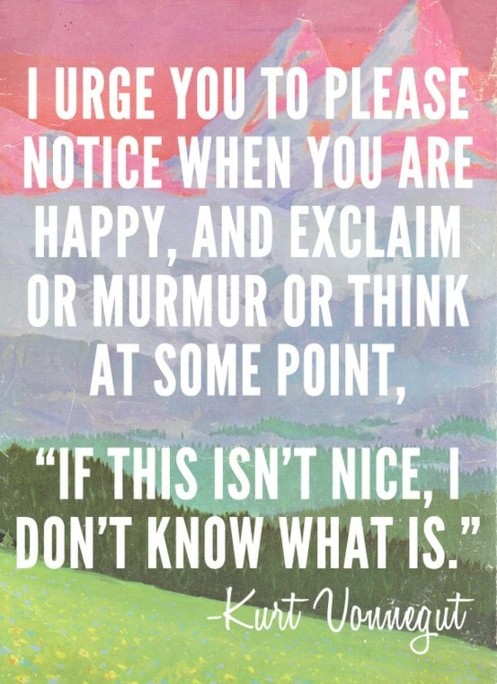
I attended modern literature class under one of the best, most inspiring teachers I ever had, John Klein. Wherever you are today Mr. Klein, God bless you. During that time, I was turned onto the writings of Willa Cather, James Baldwin, Studs Terkel, and of course, Kurt Vonnegut. Over the last 20 years, I have read most of Vonnegut’s works and travelled a lot of miles in my mind to the planet of Tralfamador, Rosewater County, Indiana, the fiery hell of Dresden, Germany and the islands of Galapagos. After all that travel, I feel like I know him personally, like he is an old friend of mine, a friend I never met or spoke with. In a world and life that can be incredibly isolated and lonely, if that isn’t nice, I don’t know what is.

If this isn’t nice, I don’t know what is

In his penultimate work Slaughterhouse-Five; The Children’s Crusade, he describes what Dresden looked like after it had been fire-bombed by the Allies during WWII and a whole beautiful city full of 125,000 citizens was burned to the ground. Vonnegut was a private in the US Army serving in the European campaign when, as a platoon scout, he was captured by the Germans and sent to work in a vitamin factory for pregnant women in Dresden. When the fire bombing started, the soldiers’ German guards took them below ground to a meat locker under Slaughter House number five. When it was over, they emerged into the blackened, ash filled light and saw the utter devastation. One of Vonnegut’s jobs was to help stack the charred bodies that remained so they could try to bring some form of order to the remains. What else is there to do but start over? While he worked, birds would flew over Vonnegut’s head and asked, “Poo-tee-weet?”. So it goes.

In describing Slaughter House to his publisher he writes, “It is so short and jumbled and jangled, Sam, because there is nothing intelligent to say about a massacre. Everybody is supposed to be dead, to never say anything or want anything ever again. Everything is supposed to be very quiet after a massacre, and it always is, except for the birds. And what do the birds say? All there is to say about a massacre, things like, “poo-tee-weet?”.

Vonnegut on his critics

When I say I never met him thanks to Pall Malls, I mean it. The man smoked packs of Pall Malls everyday and eventually died  in 2007 after falling down a flight of stairs at his home and suffering massive trauma. Yes, it was a dark ending to a great, meaningful life, but one an author with a penchant for dark, gallows humor such as himself could appreciate. But, back to the Pall Malls. He chain smoked them, unfiltered, one by one, day after day. When he met strangers and they asked him what he did, Vonnegut’s standard reply was , “I am committing suicide one cigarette at a time.” Outside his NYC townhouse as he lay dying, a bird on a nearby tree asked, “Poo-tee-weet?” So it goes.

In Slaughterhouse-5, Vonnegut writes of the ruins of Sodom and Gomorroah after the Lord had burned it to the ground with fire and brimstone, “And Lot’s wife, of course, was told not to look back where all those people, and their homes had been. But she did look back, and I lover her for that, because it is so human. So she was turned into a pillar of salt. So it goes.People aren’t supposed to look back. I’m certainly not going to do it anymore. I’ve finished my war book now. The next one I write is going to be fun. This one is a failure, and had to be, since it was written by a pillar of salt. It begins like this: Listen: Billy Pilgrim has been become unstuck in time, it ends like this: poo-tee-weet?”

My dad and I once travelled to Indianapolis in search of The Kurt Vonnegut Memorial Library. Over the years, we have searched many towns for the birthplaces or homes of our mutual or individual heroes. We once searched a small Louisville neighborhood for the boyhood home of Muhammad Ali, but we came up empty, only hearing the words spoken by a local church deacon, “That Ali sure is an interesting character.” We think it was a conspiracy of silence. We went to Okemah, Oklahoma where American folk artist Woody Guthrie was born and raised. When we asked several locals if they knew where Woody’s house was, they simply replied,” Woody who?” So it goes. In Spavinaw, Ok, we looked for the birthplace of baseball great Mickey Mantle, a boyhood hero of my dad and millions more. No signs, no markers, nothing. We asked a guy mowing his grass if he knew where Mantle’s home was. He said he thought he did but wasn’t sure but pointed to a small space down the road. The lot was empty except for overgrown brush and some wild trees. My dad took a picture of the empty lot and a bird nearby asked, “Poo-tee-weet?”

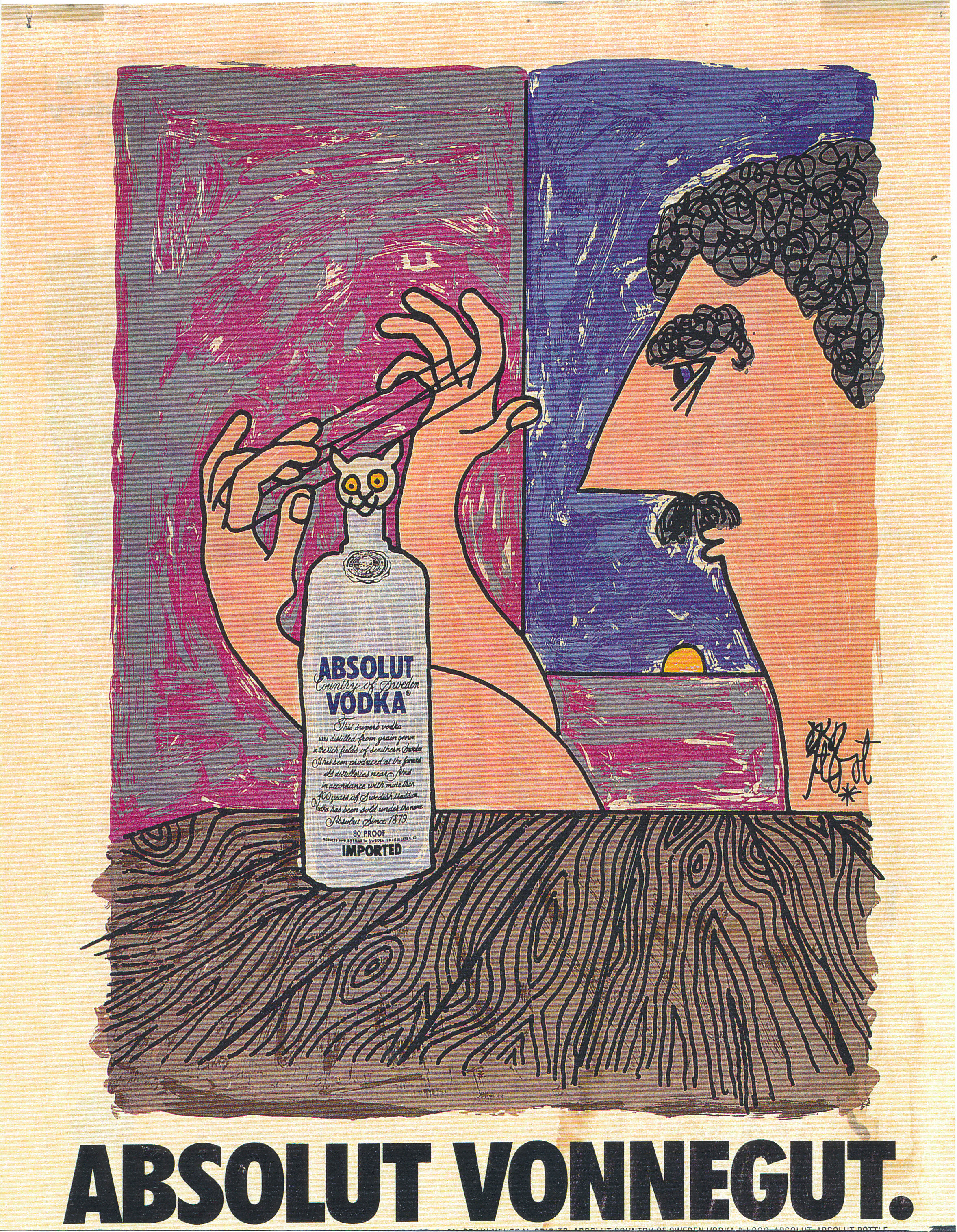
Vonnegut asshole drawing

We found the library in downtown Indy after weaving in an out of marathoners who were on a mad dash towards immortality. The library is set on the bottom floor of a nice, three-story office building. Vonnegut’s self-portrait is on one of the front windows, and copies of his books cover most of the other side. Inside you can see the typewriter he used to write much of his work during the 70s and 80s. You can see original paintings he completed including a portrait of his fictional alter ego, Kilgore Trout.

Kilgore Trout painting

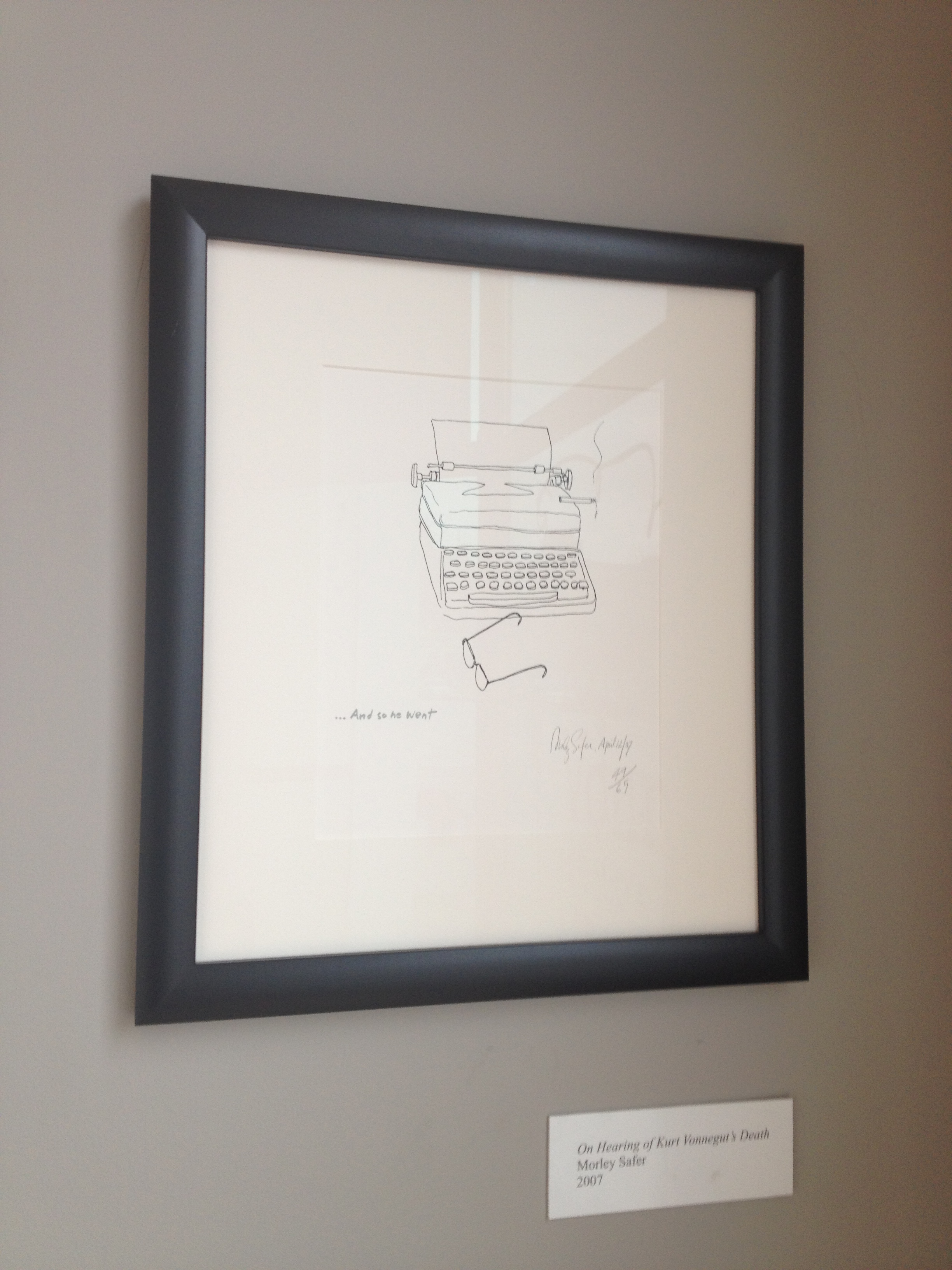
Hanging to one side is a painting done by Vonnegut’s close friend Morley Safer, newsman and long time 60 Minutes staple, completed in 2007 upon hearing of Vonnegut’s passing. The painting depicts Vonnegut’s typewriter on a desk with a pair of glasses lying down next to it and a burning cigarette dangling off the side. Under the drawing is a hand written message from one friend to another that echoes the famous author’s most known phrase. It simply states, “So he went.”

They have his work desk that he did much of his writing on in his NYC home. Atop it is one of his typewriters, books and scattered papers and handwritten notes on writing ideas never to be typed or read.

Kurt Vonnegut in his study, New York City

They have a letter written by Vonnegut’s father and sent to his son who was serving in the US Army in Germany. Being a POW, Vonnegut never received the letter which was sent back to Indianapolis. He was presented with the letter upon his return but never opened it and passed it down to his kids with explicit instructions that it was never to be opened. There it lies under glass in Indianapolis, sent to Germany at first and coming back to good old Inidiana, having never been read. My personal opinion is he never opened the letter because it was addressed to a twenty-two year old Kurt Vonnegut who, in some respects, died that day in Dresden, Germany, inside the slaughterhouse. So, the letter couldn’t possibly be opened by a dead person. Like a long distance call over time and space, from father to son. A call with a message that will never be heard. So it goes.

In Slaughterhouse- Five, Vonnegut quoted author Celine, “The truth is death. I’ve fought nicely against it as long as I could…danced with it, festooned it, waltzed it around…decorated it with streamers, titillated it….I saw a bustling street crowd and I screamed…make them stop…don’t let them move anymore at all…There make them freeze….once and for all!….So that they won’t disappear anymore.”

We are all bustling around, moving quickly through our lives, but at any moment, we can freeze time with the snap of a camera and we can go back and see ourselves. Or when we are no longer here, our friends and family can go back in time and look at us, like bugs under amber and see how we were. For my kids and grandkids and friends, some of whom I will never know, below is a picture of me and my dad, Robert Lee Hilligoss, two boys from the Land of Lincoln, trapped under amber in 2012. And so, here is a letter sent across space and time, a letter that can never be opened and read to see what exactly we said on this particular day, or hear what our voices sounded like, but if you look closely and listen hard, I bet you can hear a little bird ask, “Poo-tee-weet?”

Ryan Barr Hilligoss and Robert Lee Hilligoss at Kurt Vonnegut Memorial Library, Indianapolis, Indiana, 2012

And so on and so on. And so it goes. And so he went. But if I ever miss my friend Kurt and want to talk to him, I can just pick up my copy of God Bless You Mr.Rosewater, Timequake, Mother Night, or Breakfast of Champions, read a few passages and once again talk to an old friend of mine. If that isn’t nice I don’t know what is. God Bless You Mr.Vonnegut.

Favorite Vonnegut Quotes; Where do I get my ideas?

For an unfiltered take on Vonnegut’s thoughts on many subjects, below is a video you can watch of Vonnegut giving a speech on the 50th anniversary of the dropping of the bomb on Hiroshima:

-Free speech controversy: Slaughter House Five has been banned from schools over time and Vonnegut was the first to jump to his own defense. The U.S. Supreme Court considered the First Amendment implications of the removal of the book, among others, from public school libraries in the case of Island Trees School District v. Pico, [457 U.S. 853 (1982)], and concluded that “local school boards may not remove books from school library shelves simply because they dislike the ideas contained in those books and seek by their removal to ‘prescribe what shall be orthodox in politics, nationalism, religion, or other matters of opinion.'”

In defense of his own work and free speech everywhere, Vonnegut wrote, “Here is how I propose to end book banning in this country once and for all: every candidate for school committee should be hooked up to a lie detector  and asked this question: “Have you read a book from start to finish since high school, or did you even read a book from start to finish in high school? If the truthful answer is no, then the candidate should be told politely that he cannot get on the school committee and blow off his big bazoo about how books make children crazy.”

“Your planet’s immune system is trying to get rid of you.” Kurt Vonnegut Memorial Library, Indianapolis, Indiana

-“All my jokes are Indianapolis.  All my attitudes are Indianapolis.  My adenoids are Indianapolis.  If I ever severed myself from Indianapolis, I would be out of business.  What people like about me is Indianapolis.”

-“We are healthy only to the extent our ideas are humane.”

– “I wanted all things to seem to make sense, so we could all be happy, yes, instead of tense. And I made up lies, so they fit nice, and I made this sad world a paradise.”

– “They could feast their eyes on whatever they liked, just as long as it wasn’t relevant.” KV from Hocus Pocus

Evolution is so creative

Written by Ryan Hilligoss, November 11, 2012

Born in the Promised Land: When Politics and Rock and Roll Collide

By Ryan Hilligoss, September 2012

“The test of a first-rate intelligence is the ability to hold two opposing ideas in the mind at the same time and still retain the ability to function.” F. Scott Fitzgerald

Elvis Presley with Richard Nixon at White House along with aides Sonny West and Jerry Schilling, December 21, 1970

Fitzgerald’s quote above first appeared in The Crack Up, a posthumous collection of the artist’s work a few years after his death in 1940. The quote is often used by writers in an attempt to justify or rationalize the thought process or philosophy of persons who seem to carry extremely discordant views with nary a concern or thought to the irony and unsound mental footwork needed to keep from toppling over from the weight of mental dishonesty. Fitzgerald probably was being ironic, as I think another of his lines from the same work better speaks to the heart of his thoughts on the matter: “Of course all life is a process of breaking down.”

A little known historical fact: during the height of the anti-communist McCarthy hearings in the early 1950’s, Senator Joseph McCarthy listed Woody Guthrie as one of his favorite singers despite the fact Guthrie was known to travel in circles populated with well-known communists. OK, you got me. I dreamed that scenario after recently reading an article on Republican Vice-President Paul Ryan‘s love of the music of Rage Against the Machine. In an article published in the New York Times (my conservative friends can insert proper shudder here) on August 13, 2012, Ryan is described as follows: ” Yet even if he is viewed as politically pure by the modern-day standards of his party’s base, he is not without contradictions. The nation’s first Generation X vice-presidential candidate, he is an avowed proponent of free markets whose family has interests in oil leases. But he counts Rage Against the Machine, which sings about the greed of oil companies and whose Web site praises the anti-corporate Occupy Wall Street movement, among his favorite bands.”

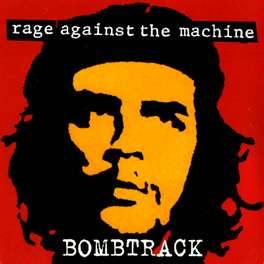
If this were a dance club and the DJ was playing Bombtrack on the turntable, the needle just jumped and scratched the hell out of the vinyl. Paul Ryan, the newly named Republican vice-presidential candidate, who is the ardent right-wing, fiscal conservative poster boy of the Tea Party and whose main focus the last few years has been in dismantling Medicare and other social services for the poor and disenfranchised likes the music of ultra left-wing Rage Against The Machine?? RATM, an LA based rap/metal/punk band released their first album in 1992 and played together until 2000, released songs such as Voice of the Voiceless, Know Your Enemy, Vietnow and People of the Sun which spoke out against, to name a few, the American  two-party political system being controlled by corporatist, cultural imperialism, and the treatment of Native Americans while supporting leftists rebels in Mexico, labor unions, the homeless, immigrants  and social justice for all here in America and around the world.

While I whole heartedly believe that all people have the right to listen and support the music of their choosing, I don’t understand the dichotomy of listening to the music of a band that stands in direct opposition to everything you stand for politically and philosophically. Ryan has said he likes the band’s sound but willfully tunes out the lyrics. This is like someone saying they are die-hard anti-war pacifists, but they like country music and can’t help be drawn to Toby Keith’s Courtesy of the Red, White and Blue. While the band’s pounding beats, driving rhythms and guitar hooks can be hypnotizing, it’s hard to miss the meaning of the lyrics to songs such as Bombtrack:

Instead I warm my hands on the flames of the flag

As I recall our downfall

And the business that burned us all

See through the news and views that twist reality

Enough/I call the bluff/Manifest destiny

Landlords and power whores

On my people they took turns

Dispute the suits I ignite and then watch em’ burn

The thoughts of a militant mind

Hardline, hardline, after hardline

And it’s hard to ignore the lyrics and meaning in another Rage track, Killing In The Name, when lead singer Zach de la Rocha implies that some law enforcement and military personnel may also be part of the KKK, “The same that were enforcers, are the same that burn crosses.” de la Rocha then launches into the phrase “F$%@ you I won’t do what ya’ tell me” repeatedly at the top of his lungs, over and over. 16 times to be exact. This is why I think Ryan is being more than just a little disengenous, to borrow John McCain‘s description of Michael Moore at the 2008 Republican convention.

Tom Morello, the band’s guitarist who, since the band broke up in 2000, has been performing under the guise of The Night Watchmen, spoke out emphatically against Paul Ryan’s politics in Rolling Stone on August 16, 2012 in a piece entitled, Paul Ryan Is the Embodiment of the Machine Our Music Rages Against, in which he writes, “Ryan claims that he likes Rage’s sound, but not the lyrics. Well, I don’t  care for Paul Ryan’s sound or his lyrics. He can like whatever bands he  wants, but his guiding vision of shifting revenue more radically to the one  percent is antithetical to the message of Rage.”

“I wonder what Ryan’s favorite Rage song is? Is it the one where we condemn  the genocide of Native Americans? The one lambasting American imperialism? Our  cover of “F$!# the Police”? Or is it the one where we call on the people to  seize the means of production? So many excellent choices to jam out to at Young  Republican meetings!”

Read the full article here: http://www.rollingstone.com/music/news/tom-morello-paul-ryan-is-the-embodiment-of-the-machine-our-music-rages-against-20120816#ixzz24uH6c9Iz

And apparently, Rage and Morello are not the only ones who feel this way as in the past week alone, Dee Snider of Twisted Sister asked Ryan’s office to stop using We’re Not Gonna Take It and Silversun Pickups requested Ryan stop using their song Panic Switch.

In another political campaign song choice gone awry, last year Michelle Bachmann chose to open many of her campaign stops with Elvis Presley’s cover version of Chuck Berry’s The Promised Land. While not nearly as politically divisive or perplexing, but to me equally disturbing, given the original intent and meaning  of the song for both Chuck Berry and Elvis Presley, and Bachmann’s far right conservative views, Bachman misappropriated the song for her political agenda and, given her beliefs and statements in religion, meant the song to be thought of by her supporters as a biblical theme.

Elvis recorded his cover of Chuck Berry’s Promised Land in 1973. Berry wrote his version in 1963, ironically enough, while he was serving time in prison. Given that Martin Luther King’s “I Have A Dream Speech” was given in August of 1963  in which he talked about making it to the “promised land”, it is very possible that Berry was influenced by King. Elvis Presley covered many of Berry’s songs, both in concert and in recording studio. Presley’s recording of Promised Land stands as one of his finest rock recordings ever, driven by the core of his touring band musicians, and was almost a telling of Presley’s own story of a poor boy from East Tupelo, Mississippi finding his way to the American Dream through sheer tenacity and determination.

During the Republican presidential race last year, Bachmann told a crowd of supporters that they needed to say happy birthday to Elvis despite the fact the date, August 16th, was actually the 34th anniversary of Elvis Prelsey’s death, not his birthday which was January 8th, 1935. She told the crowd, “You can’t do better than Elvis Presley.” Well, I guess there is one thing she and I can agree on.

But I digress. Back to Morello’s main argument about the inherent contradiction of Paul Ryan being an ardent supporter of RATM. I think his concern is the same of many artists who struggle, through their work, to reach their observers and fans and to truly communicate a part of themselves only to find out the message isn’t clear. Morello writes, “Paul Ryan’s love of Rage  Against the Machine is amusing, because he is the embodiment of the machine  that our music has been raging against for two decades. Charles Manson loved the Beatles but didn’t understand  them. Governor Chris Christie loves Bruce  Springsteen but doesn’t understand him. And Paul Ryan is clueless about his  favorite band, Rage Against the Machine.”

Morello’s use of Springsteen here carries significant weight for a few reasons. First, Morello is a die-hard  fan of Springsteen’s music and has guest appeared with Springsteen on stage to play scorching guitar solos on The Ghost of Tom Joad and appeared together again on  Late Night With Jimmy Fallon on Death To My Hometown from the Wrecking Ball album, for which Morello added incredible guitar solos on recorded versions to My Depression and Jack of All Trades. Secondly, Springsteen and Morello have similar thoughts on some political and social justice issues. But more importantly, Morello may have mentioned Springsteen’s name in this situation given what happened when Ronald Reagan misappropriated Bruce’s name and song Born in the USA during the 1984 presidential campaign.

‘Yankee Doodle Springsteen’

In June 1984, Springsteen, the self-described “hardest working white man in show business” (James Brown being the hardest working black man in show business), released the album Born in the USA, a collection of songs he had been working on since The River album was released in 1980. The album’s title track was a song he had originally written during the Nebraska project and which was recorded in a solo, acoustic fashion that leant great credence to the power of the lyrics which told the story of a Vietnam veteran who came back to the United States only to find there was no place for him anymore at work, at home or in society in general and was told by his VA man, “Son you just don’t understand.”

The album became a smash sensation, propelling Springsteen from a rock star into a world-wide phenomenon. The album sold 15 million copies in the US alone, peaked at #1 on the Billboard chart, spawned seven top ten singles, and remained on the charts for over 2 years. Speaking on this new stage of his career, Springsteen said, ” I don’t really think [money] does change you. It’s an inanimate thing, a tool, a convenience. If you’ve got to have a problem, it’s a good problem to have. (…) Money was kind of part of the dream when I started. I don’t think…I never felt like I ever played a note for the money. I think if I did, people would know, and they’d throw you out of the joint. And you’d deserve to go. But at the same time, it was a part of the dream.” Another part of that dream was getting unwanted and misunderstood attention from media members and even politicians.

In early September, 1984, conservative columnist George Will attended a Springsteen concert at the invitation of E Street Band drummer Max Weinberg and his wife. A few days later, his column, entitled Yankee Doodle Springsteen was published in papers across the country and contained this, “I have not got a clue about Springsteen’s politics, if any, but flags get waved at his concerts while he sings songs about hard times.  He is no whiner, and the recitation of closed factories and other problems always seems punctuated by a grand, cheerful affirmation: ‘Born in the U.S.A.!’”

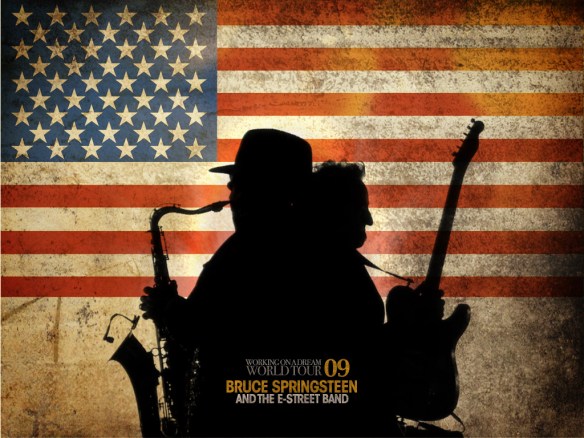
George Will alone cannot be held responsible for hearing the thundering, anthemic song as recorded on the album and performed in the same arrangement on that tour, as a patriotic, flag waving send up to Old Glory and all it stands for, because millions of other listeners made a similar mistake. The ‘cheerful affirmation’ Will wrote of was written specifically as a paean to the trials and tribulations of returning military personnel best exemplified by Ron Kovic, who wrote Born on the Fourth of July about his own experiences. While Springsteen often played concerts on that tour with a huge American flag behind him, ala Bob Dylan in 1960s, that flag might have easily been turned upside down, which is the universal sign of distress for those Springsteen was singing about.

George Will had some friends within the Reagan White House who either were impacted by Will’s column or were whispered advice, and worked a Springsteen reference into a campaign stop speech within days of the column’s publication. In a stop in Hammonton, NJ, Reagan told the crowd,  “America’s future rests in a thousand dreams inside your hearts. It rests in the message of hope in songs so many young Americans admire: New Jersey’s own Bruce Springsteen.  And helping you make those dreams come true is what this job of mine is all about.” Reagan’s office also quietly reached out to Springsteen’s management about the possibility of using the song for their campaign interests, and the request was politely declined.

Playing a concert on September 22, 1984 in Pittsburg, Springsteen addressed the situation directly with his audience while introducing his song, Johnny 99, a song about an unemployed auto worker who turns to murder.  “The President was mentioning my name the other day, and I kinda got to wondering what his favorite album musta been.  I don’t think it was the Nebraska album [about hard times in America].  I don’t think he’s been listening to this one” [“Johnny 99”].

To clarify his thoughts even further, Springsteen told Rolling Stone, “I think people have a need to feel good about the country they live in.  But what’s happening, I think, is that need — which is a good thing — is getting manipulated and exploited.  You see it in the Reagan election ads on TV, you know, ‘It’s morning in America,’ and you say, ‘Well, it’s not morning in Pittsburgh.’”

If you strip down the song to its’ bare essentials and look at the song in the stark realities of black and white by reading just the lyrics on the page, it’s hard to miss the true meaning of this enduring song:

I had a brother at Khe San

Fightin’ off the Vietcong

They’re still there, but he’s all gone

He had a woman that he loved in Saigon

I got a picture of him in her arms

Down in the shadow of the penitentiary

Out by the gas fires of the refinery

I’m ten years, burning down the road

Nowhere to run now ain’t got nowhere to go

I was born in the USA

I’m a long gone daddy now

You can also get a full sense of the meaning and emotion of the song by watching the clip below of the blues version, played solo with a slide on a 12-string acoustic taken from the Live in New York video.

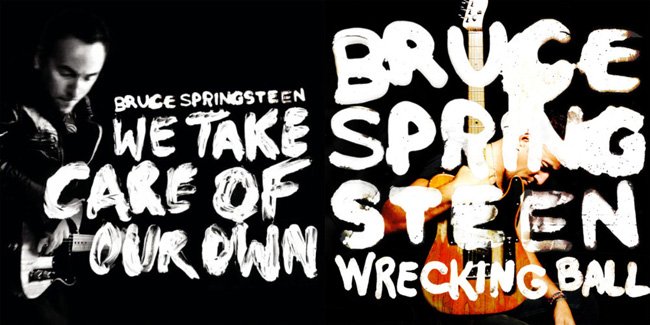
Earlier this year, Springsteen released his 17th studio album, entitled Wrecking Ball, which partially plays as a retelling of what happened with our economy and society over the last four or five years. The first track on the album is We Take Care of Our Own. On first glance, the song plays as a scorching indictment of the Bush presidency response to Katrina and the aftermath with the following verse and chorus:

From Chicago to New Orleans
From the muscle to the bone
From the shotgun shack to the Superdome
We yelled “help” but the cavalry stayed home
There ain’t no-one hearing the bugle blown
We take care of our own
Wherever this flag’s flown
We take care of our own

With pounding drums, guitars wailing a warning call, catchy guitar hooks and the refrain that “wherever this flag is flown, we take care of our own,” the song is a perfect companion piece in the irony of Bruce Springsteen. What he really thinks is that we haven’t and don’t take care of our own, whether here or around the world, as a people and as a government. In 2008, Springsteen openly campaigned for Barack Obama and sung at many campaign rallies. Since then, like many who supported the president, Springsteen has quietly separated himself and has openly stated he will not campaign for the president this year. However, Obama has begun using We Take Care of Our Own at some campaign stops, apparently with Springsteen’s blessing as Obama has not been asked to stop using it. The past truly is prologue.

To bring this back around, in a 1987 BBC interview Springsteen said, “Born in the USA is not ambiguous. All you gotta’ do is listen to the verses. If you don’t listen to the verses, you’re not gonna get the whole song, you’re just gonna get the chorus. What you do if someone doesn’t understand your song is you keep singing it.” If that is true, then I guess Tom Morello needs to stand outside of Paul Ryan’s campaign headquarters with a boom box held aloft over his head, just like John Cusak in Say Anything, while blaring Know Your Enemy over and over until Ryan can no longer just hear the catchy beat but has to confront the verses.

I wonder what songs Paul Ryan likes from Morello’s latest album entitled Union Town that was recorded and released in support of the Occupy Wall Street movement, as well as the demonstrations in Wisconsin last year surrounding Governor Walker’s actions against state employee unions, for which Morello travelled to Madison, WI to play and support the cause. Maybe it is Morello’s cover of Woody Guthrie’s This Land Is Your Land, or maybe What Side Are You On,  or just maybe it is the title track. I can’t quite remember the lyrics, something about if you live under a bridge, then all roads lead to  home and this being a union town all down the line. Not sure what that guys is saying, but it sure is a foot stomper and a catchy little ditty.

Notes of Interest:

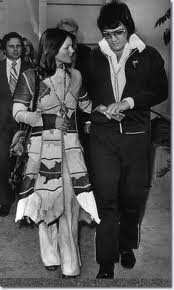
Elvis meets Nixon– In true irony, Elvis Presley went to the White House on a whim a few days before Christmas without an appointment or prior notice to ask the President to issue him official documents certifying Elvis as an honorary member of the federal Drug Enforcement Agency. Elvis and two of his friends/body guards Sonny West and Jerry Schilling, flew from Memphis to Washington without notifying anyone else of their whereabouts. On the flight, Elvis met a serviceman returning from Vietnam who was in route to visit his family for Christmas, and in typical Elvis fashion, gave the soldier the only cash the three had on them, $500, so the soldier could buy his family and friends gifts, much to the consternation of his aides. After arriving in Washington, Elvis went to the White House and gave a guard a personal letter he had written to the President along with a gift of a pearl handled, Colt .45 pistol. Shortly after, a presidential aide reached out to Elvis at his Washington area hotel and made arrangements for the meeting. After some wrangling and arm twisting, President Nixon obtained the papers and DEA badges Elvis requested and presented them to him along with White House trinkets for Sonny and Jerry and their wives.

While Nixon was President, his office contacted Colonel Parker to request Elvis to perform at the White House. Parker demanded a performance fee of $150,000  which was declined as all such performances up to that time had been done gratis.

Vietnam/Light of Day/Born In The USA:

In 1981, Springsteen was asked to write music for a film by Paul Schrader called Born in the U.S.A. (Schrader’s movie would eventually be released 1987, entitled Light of Day, featuring Michael J. Fox and Joan Jett). Shortly after, when Springsteen was working on a song titled “Vietnam,” he glanced at the script and sang the title. The song, entitled as the work-in-progress movie, was already finished during the sessions of Springsteen’s introspective album Nebraska, and Springsteen originally wanted to include it on the album. However, it was removed as it did not coincide with the dark feel of the rest of the songs.

Chris Christie on Bruce: Christie is an ardent, militant Springsteen fan who has seen him in concert more than 200 times and has the ticket stubs to prove it. Christie recently gave the opening keynote address at the 2012 Republican Presidential convention and dropped this line into his speech, “I was her son as I listened to “Darkness on the Edge of Town” with my high school friends on the Jersey Shore.”


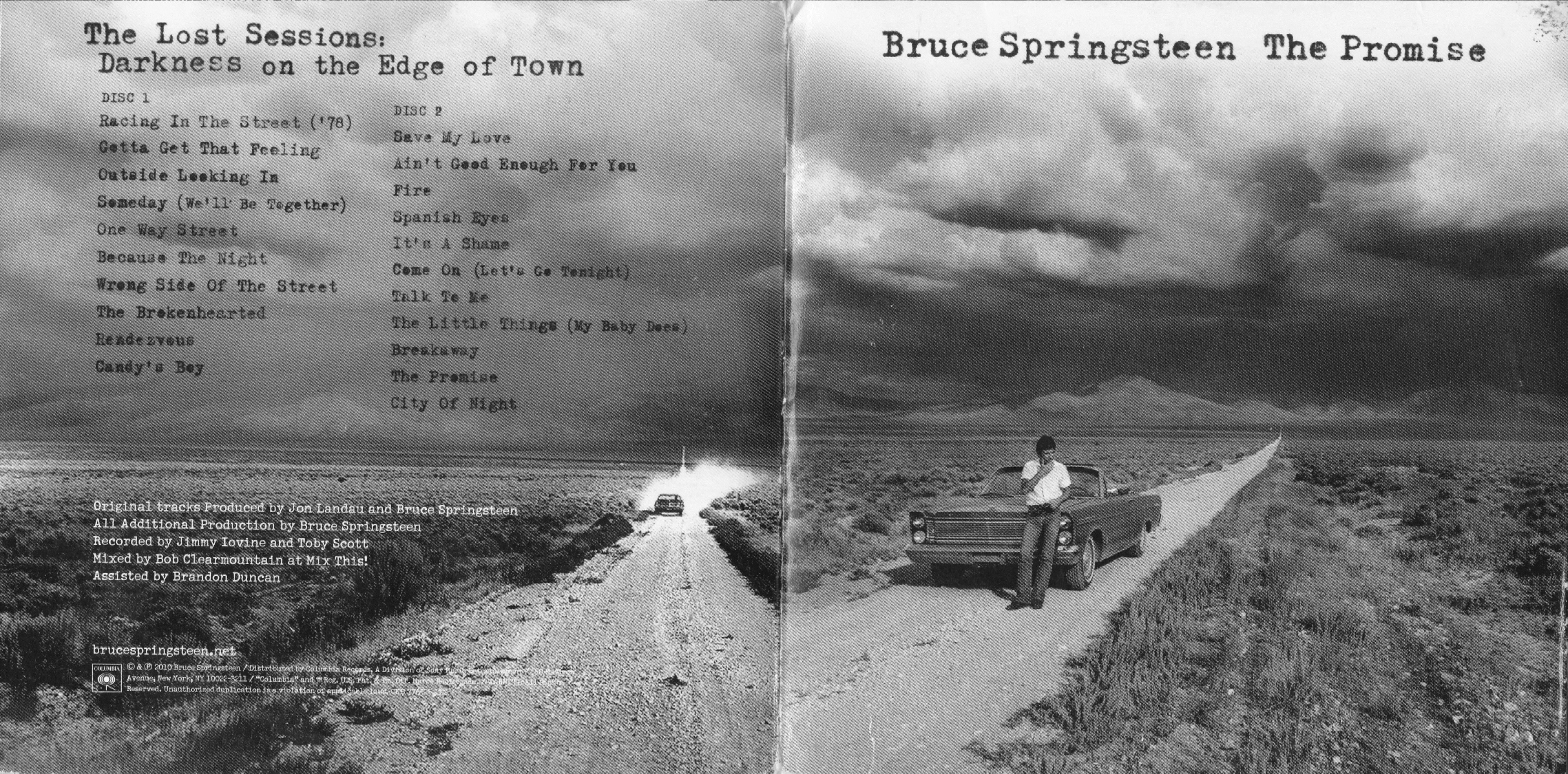
Elvis Is Everywhere: Springsteen’s Darkness on the Edge of Town and The Promise

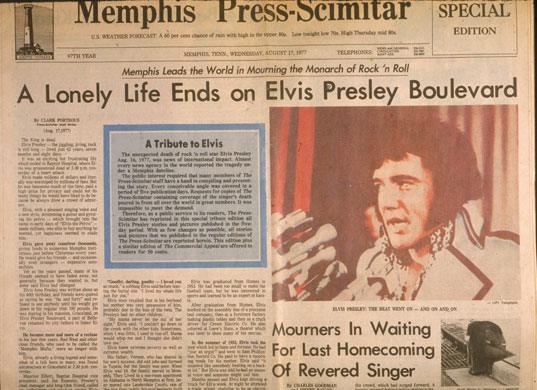
A Lonely Life Ends on Elvis Presley Boulevard, Memphis Press Scimitar headline August 17, 1977

“There’ll never be another one like him. He was the king of everyone and especially of our people. He was the king of gypsies. He was ours.”
 

“Elvis Presley doesn’t die. I die, you die, but he doesn’t. And he damn sure did.”

By Ryan Hilligoss, August 2012

The Promise of Rock and Roll: 35 years burning down that road; A great American artist dies and a young American musician comes to terms with his childhood dreams and the reality of adult life

On May 28th, 1977, after a legal dispute that kept him from making records for over a year, Bruce Springsteen finally wrested control of his music and career by formally settling the dispute with former manager Mike Appel.On that same date, Springsteen attended an Elvis Presley concert in Philadelphia, and it was not one of Elvis’ better performances according to reviews and fan accounts, including Bruce’s own account, as he related it to Ed Sciaky…”that wasn’t a very good night.” Within days, Springsteen entered the recording studio for the first time in nearly two years and began recording material that would make up one of his greatest albums, Darkness on the Edge of Town, released in 1978.

During those sessions, Springsteen and the E Street Band recorded over seventy songs, of which only ten made it onto the Darkness album. Two of the new songs were given away to other artists. A partially completed version of  Because the Night was given to Patti Smith, who was also working on a new album at the time that was being produced by Springsteen’s then recording engineer, Jimmy Iovine. The song Fire was given to Robert Gordon. More than thirty years later, twenty-one more of those songs were released as The Promise: The Lost Sessions – Darkness on The Edge of Town.

At the time Springsteen was recording songs for Darkness, a tell-all book on Elvis Presley, Elvis: What Happened?,based on material presented by three of his former body guards, was being readied for publication. What many had been whispering about Presley for years regarding pharmaceutical drug abuse and sometimes bizarre behavior was soon to be affirmed as partial truth by those who knew him the best, including Red West who had been a high school classmate of Elvis at Humes High School in Memphis, a close friend, bodyguard and sometimes even a songwriter for Presley (“Separate Ways,” “If You Talk in Your Sleep” and “Indescribably Blue.”)

According to Springsteen biographer Dave Marsh, “Intrigued by the hero others saw in him, Bruce also took a closer look at his own role models. In July, soon after moving to the Record Plant, Bruce and the band found some advance copies of  Elvis: What Happened?, Steve Dunleavy’s muckracking book about Presley, in a bookshop around the corner. The influence of the King clicked back in, and for several weeks, the studio took on the look of an Elvis shrine. Bruce identified with Elvis’s career, the way it seemed totally in the artist’s control at one moment, and careening without guidance the next.”
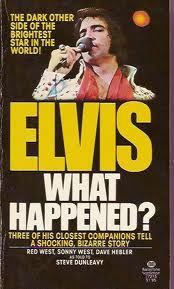
Just a few weeks after the book was published and just as he was getting ready for yet another tour, Elvis Presley died on August 16th, 1977 at the age of forty-two. Elvis Presley was born on January 8th, 1935 to Gladys and Vernon Presley in Tupelo, Mississippi in a one room shotgun shack (Wrecking Ball “…from the shotgun shack to the Superdome”) The Presleys lived economically troubled and Vernon was actually sent to prison for three years for trying to forge a check to buy the family groceries. During his formative years living in mostly black, east Tupelo, in a part of town called Shake Rag, Presley was exposed to myriad musical styles: hard, rough blues, gospel at church every Sunday and country and western while listening to the radio. Presley then forged his musical tastes into a new sound that revolutionized American popular music which reverberated around the world.

As the keynote speaker this year at the South by Southwest music festival in Autstin, Tx, Springsteen said, “Remember, it wasn’t just the way Elvis looked; it was the way he moved that made people crazy, pissed off, driven to screaming ecstasy and profane revulsion. That was television. When they made an attempt to censor him from the waist down, it was because of what you could see happening in his pants. Elvis was the first modern 20th-century man, the precursor of the sexual revolution, of the Civil Rights revolution, drawn from the same Memphis as Martin Luther King, creating fundamental outsider art that would be embraced by a mainstream popular culture.

Television and Elvis gave us full access to a new language; a new form of communication; a new way of being; a new way of looking; a new way of thinking about sex, about race, about identity, about life; a new way of being an American, a human being and a new way of hearing music. Once Elvis came across the airwaves, once he was heard and seen in action, you could not put the genie back in the bottle. After that moment, there was yesterday, and there was today, and there was a red-hot, rockabilly forging of a new tomorrow before your very eyes.”

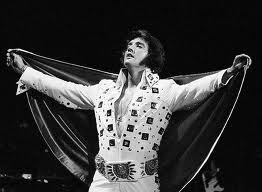
No one knows for sure exactly when, but sometime during the Nixon administration, Elvis lost the fire to give it his best effort and became lost in a fog of “nothing running through his veins”, loneliness and depression.  In 1976, Elvis told his recording producer Felton Jarvis, “I’m so tired of being Elvis Presley.” But the never ending carnival of constant touring, playing extended stands at Las Vegas and Lake Tahoe, and recording low rent songs like Three Corn Patches and a self-parody, self-referential Raised on Rock, was the only way he knew to keep himself and those around him afloat financially. On August 16th, 1977, Springsteen’s first and most powerful rock inspirations, broke that promise in the most ultimate and final way. Elvis dreamed and sang about the ‘Impossible Dream’, but once he obtained it, or at least his own idea of the American Dream, he didn’t know what to do with it other than to give some of it away to friends, family and strangers in the forms of cars, houses and jewelry, or by renting out the local amusement park at night.The greatest lesson Springsteen learned from his idol was that “it’s easy to let the best of yourself slip away and dreams don’t mean nothin’ unless you’re strong enough to fight for them.”

If you listen to the Born To Run album and many of the songs on The Promise, they play as love letters to the nostalgia of musical influences of Springsteen’s childhood and early days of playing swim clubs and Jersey shore bars. Listen to these songs,  and you can hear the influence of Duane Eddy’s guitar on Save My Love, Roy Orbison’s It’s Over drum beat on Breakaway, Buddy Holly drum beat and rhythm guitar on Outside Looking In, and Beach Boy and The Crystals background harmonies on many songs. After Elvis died, the past was over and dark times were here in America and “calling out around the world” and Darkness was a refutation of those earlier sounds.

“When Elvis died, the event was a kind of explosion that went off silently in minds and hearts; out of that explosion came many fragments, edging slowly into the light and taking shape, changing shape again and again as the years went by,” wrote Greil Marcus in Dead Elvis. Springsteen, in many ways, both consciously and unconsciously, proved Marcus’ theorem true in the work he completed at the time of Darkness recording sessions which begat both Darkness on the Edge of Town and The Promise. 35 years later, if you listen hard enough to the music and the lyrics within that work, you can clearly hear the influence of Elvis Presley’s music and Presley’s death everywhere.

Rock and Roll as The Promise:Two things happened during Darkness: the punk explosion and Elvis died. It was the beginning and ending and a fascinating moment. Everything shifted at that moment.” Bruce Springsteen, 2010 E Street Radio interview with fans

It’s also hard not to hear the next comment from Springsteen, speaking in Thom Zimny’s film The Promise: The Making of Darkness on the Edge of Town, as anything but a direct statement on Elvis’ death: “The success of Born To Run brought me an audience. It also separated me from all the things in life I had been trying to make connections to my whole life. And it frightened me because I understood what I had of value at my core was rooted in the place that I had grown up, the people I had known, the experiences I had. And if I moved away from those things into a sphere of just freedom as pure license, to go about your life as you desire, without connection. That’s where a lot of people I admired had drifted away from the essential things that made them great. And more than rich, more than famous, more than happy, I wanted to be great.”

Below, I’m going to describe some of the connections that I hear as an Elvis and Springsteen fan in the music that Bruce made during this very important period of his career, a period that also happened to coincide with the tragic death of his original musical inspiration. The beauty of any art, whether it be music, painting, photography, or literature, is that it is open to the interpretation of each and every individual. This is what I hear in my own head. It’s not necessarily what Bruce intended for listeners to hear, either consciously or unconsciously. It’s also not all that I think these songs are “about.” Of course, if you don’t hear the same connections or hear variations of the same, that’s okay, too.

The Promise: This song’s writing started in 1976 but was not completed until 1978 and the lyrics vary throughout the various recorded versions. Yes, it was partially written well before Elvis died, but again, these are the images that come to my mind as a fan of both artists.

The Promise is a song Springsteen described at a concert in March,1977 in Boston as “a song I wrote about a year ago and kind of a return to Thunder Road.”

Terry works in a rock and roll band

Searching for that million dollar sound 

The name Terry can stand as a metaphor for many American pop musicians, many of whom came from a background of hard lives. Musicians ranging from Elvis, Johnny Cash, Muddy Waters, Chuck Berry, Springsteen himself  and everyone in between. Rock and roll has become for both artists and listeners, a ‘Mystery Train’  steaming through a ‘Land of Hope and Dreams’.
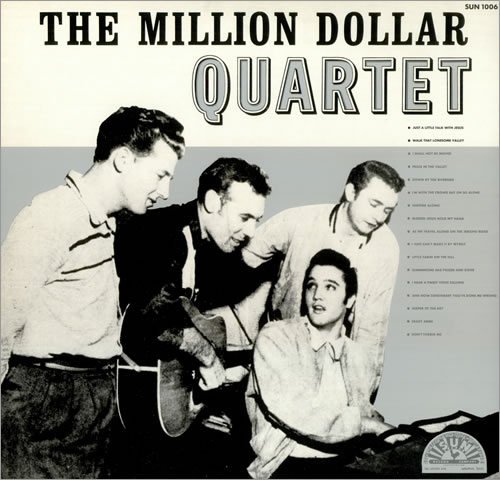
Some nights I go the drive-in, some nights I stay home

I followed that dream just like those guys do way up on the screen

As a teenager growing up poor in Memphis, Elvis worked various jobs to help support the family, then living in the Lauderdale Courts public housing projects. One of those jobs was an usher at Loew’s State movie theater in downtown Memphis. He worked from 5-10, 5 nights a week for $12.50/week. He would watch the movies on the screen during showings and repeat the lines of his favorite actors like Tony Curtis and Marlon Brando and dreamed of being up on that screen one day ‘just like those guys do’.

Also, one of Presley’s 31 Hollywood films, not counting 2 full length documentaries, was entitled Follow That Dream, released in 1962 and contained a song of the same name. In the late 80’s, Springsteen began performing the song in concert, and his version had radically different lyrics including

Now every man has the right to live
The right to a chance, to give what he has to give
The right to fight for the things he believes
For the things that come to him in dreams
Watch Springsteen’s  live performance of his version of Presley’s Follow That Dream, , containing radically revised lyrics by using below link.

http://www.youtube.com/watch?feature=player_detailpage&v=9XgIqMV9rXA

When the promise was broken, I cashed in a few of my own dreams

Well now I built that Challenger by myself

But I needed money and I sold it

Elvis built his “Challenger” by himself, i.e his version of rock and roll by incorporating all the various styles that formed early rock: rhythm and blues, blues, country, bluegrass, and gospel into one style. Elvis sold it by “selling out” his dreams by acting in sub-par movies, recording less than stellar material to meet demanding contracts from RCA and touring around the country playing, often times, half-hearted concerts. In the last four to five years of his performances, Elvis’ stage show played as pure paint by numbers with the occasional performance of a new song from the latest album such as Hurt, T-R-O-U-B-L-E, and Fairy Tales. If you listen to some of concert recordings released under the Follow That Dream label through EPE, you can hear the same songs, vocal stylings and arrangements from one show to another. While many bands have done this for years,  Elvis broke his ‘promise’ to his fans by forgetting the ultimate relationship all performers should have with their audience. This relationship is best summed up in Springsteen’s own words, “Part of what pop promised, what rock promised was the never-ending now. No no no, it’s about living right now. All of a sudden you were lifted up into a higher place of living and experience. There was this beautiful, ever-present now.”

Everyday it just gets harder to live

This dream I’m believing in

Springsteen said on jumping the wall at Graceland in 1976, “When I jumped over the wall that night, I didn’t know who I was gonna meet. And the guard who stopped me at the door did me the biggest favor of my life. I had misunderstood. It was innocent and I was having a ball, but it wasn’t right. In the end, you cannot live inside that dream.”

In an earlier version of The Promise, Springsteen sang, “Thunder Road, yeah I sit up every morning til it turns light, Thunder Road” in a plaintive, wail of pain.

Elvis’s “normal” sleep schedule was to stay up throughout the night and then sleep during the day. In hearing the wail of pain in Springsteen’s voice on this line, I can picture Elvis sitting up many nights, alone in his secluded room and imagining what his life and career could have become if he were able to play the movie roles he really wanted such as Robert Mitchum’s brother in Thunder Road which he was offered to play in 1958, or roles he was offered or wanted to play in films like The Rainmaker and A Star is Born. On the Born To Run album, Thunder Road was the road of hope, renewal and self-realization for the song’s characters. Elvis saw the role in the movie Thunder Road as an opportunity for ‘real acting” and developing his overall abilities as an artist. There Elvis sits in his bedroom, looking out the window off into the distance and yelling out Thunder Road into the dark of night, with no one to hear or help, as if him crying out could change anything, a dream deferred.
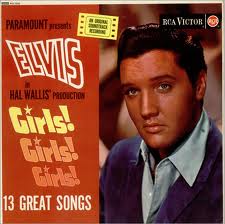
In the last live recorded version of The Promise before Springsteen and band entered the studio, the song contained the lyric,  ‘There’s something burning out on the highway tonight.’

The version of the song contained on The Promise album that was recorded after Presley’s death , has this revised lyric, ‘There’s something dying down on the highway tonight.’

Two things come to mind with searing power with this one line:

(1)Elvis’ recording of Long Black Limousine in 1969 which contained ‘There’s a long line of mourners driving down our little street/Their fancy cars such a sight to see/And now they finally brought you home/When you left me/ you said you’d be returning in a fancy car for all to see/Now everyone is watching you/You finally had your dream/Now you’re riding in a long black limousine‘. Also interesting to note that Elvis’ recording starts with ominous church bells and drum cymbal played in time that is very similar to drummer Max Weinberg’s time keeping rim shots during Racing in the Street that is supposed to signify the passage of time. On Racing’, the same time keeping is akin to Al Jackson’s drumming on Otis Redding’s Try a Little Tenderness

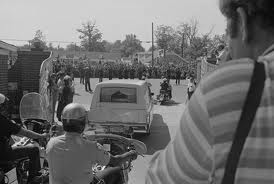
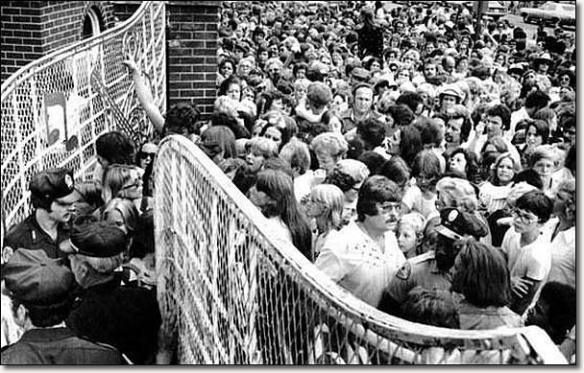
(2)I have a “sound picture” of Elvis’s funeral procession with its’ long white limousine, as opposed to long black limousine Elvis sang about in 1969 recording, travelling down Elvis Presley Boulevard. Indeed, something is dying down on the highway tonight.

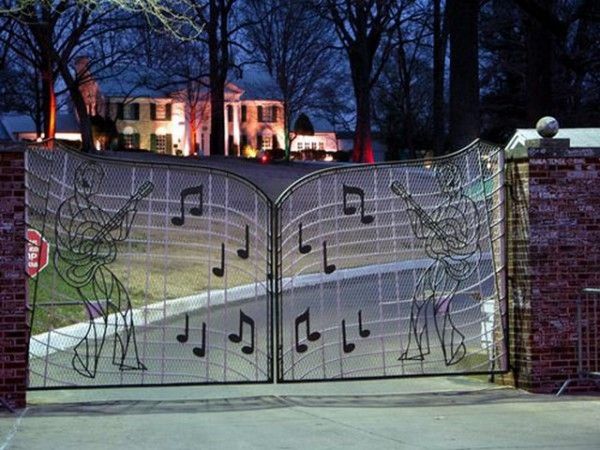
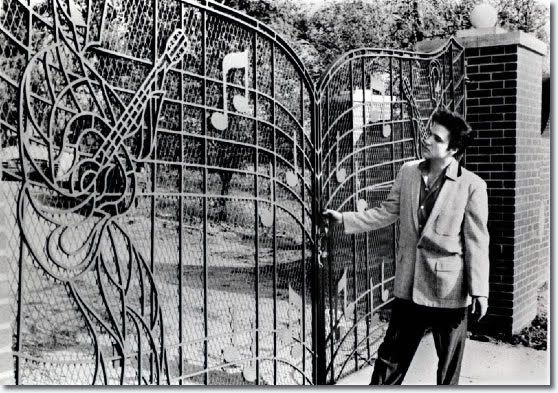
Elvis Presley’s funeral procession leaving Graceland past musical gates, August 18, 1977

I won big once and I hit the coast

Elvis “hit it big” with Sun Studio recordings of Mystery Train and That’s All Right Mama and then signed with RCA and recorded in New York City

Inside I felt like I was carryin’ the broken spirits of all the other ones who lost

Elvis often times told people that he felt like he was living enough for two people because he was carrying the soul of his still-born twin brother Jesse Garon.

Like when the truth is spoken and it don’t make no difference

Elvis: What Happened? being published and the truth being spoken of his drug use and bizarre behavior, but it didn’t help as he died within weeks of advance copies hitting the streets.

The Promised Land, echoes of Presley and Chuck Berry

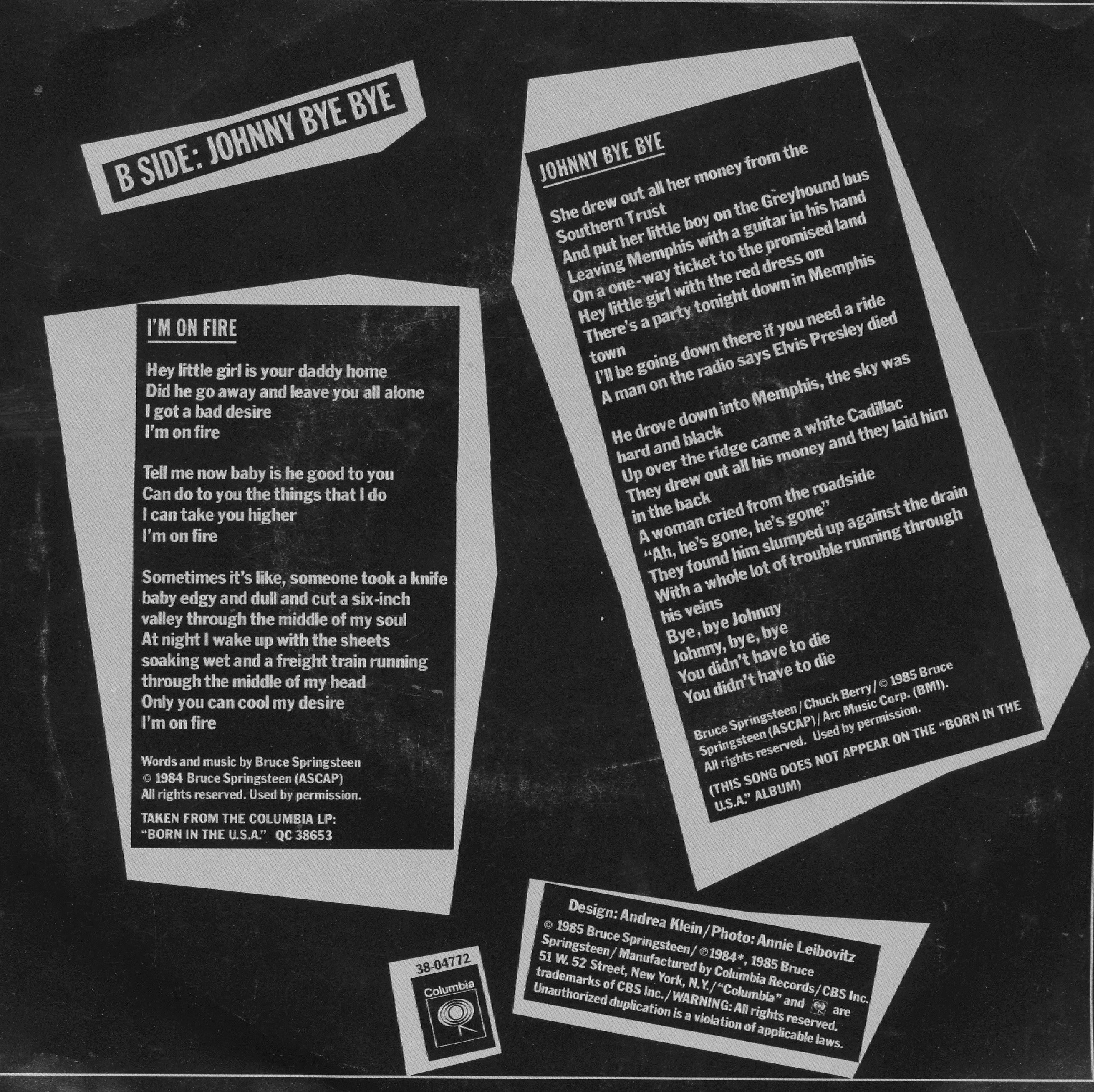
In 1973, amidst his devastating divorce from Priscilla, Elvis recorded a cover of Chuck Berry’s Promised Land. Berry wrote his version in 1963, ironically enough, while he was serving time in prison. Given that Martin Luther King’s “I Have A Dream Speech” was given in August of 1963  in which he talked about making it to the “promised land”, it is very possible that Berry was influenced by King. Elvis Presley covered many of Berry’s songs, both in concert and in recording studio. Presley’s recording of Promised Land stands as one of his finest rock recordings ever, driven by the core of his touring band musicians, and was almost a telling of Presley’s own story of a poor boy making his way to the golden state.  Given the influence of both Berry and Presley on Springsteen’s own music, it is not difficult to assume, his own Promised Land may have been inspired by their versions. In Springsteen’s indelible farewell to Elvis Presley, Johnny Bye Bye, he references Chuck Berry’s song in telling Elvis’ story: He left Memphis with a guitar in his hand/On a way one ticket to the Promised Land.

In Springsteen’s Promised Land, he wrote:

Blow away the dreams that tear you apart

Blow away the dreams that break your heart

Blow away the lies that leave you nothing

But lost and brokenhearted

After Elvis died, many of the dreams he had inspired in millions including a seven year-old boy growing up in Freehold, NJ, were shown to be false; ‘you can’t live inside those dreams.’ Bruce Springsteen was brokenhearted at the death of Elvis and was inspired to include the above lyrics in The Promised Land, one of his finest songs of his career. He was also inspired to write the song The Brokenhearted which has a vocal style and phrasing very similar to Elvis. The song’s atmosphere reminded me so much of Heartbreak Hotel that a more fitting title might be Heartbreak Hotel, Part II.
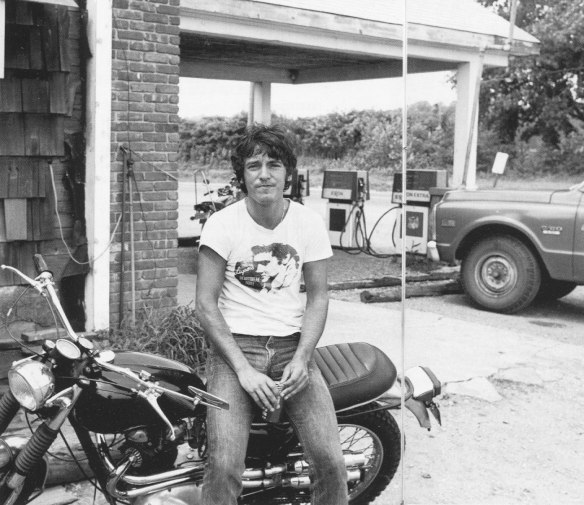
From The Promise documentary, Springsteen said of his Promised Land lyrics, “You had to lose your illusions while still holding onto some sense of possibilities. But more so, your illusions of adult life and a life without limitations. Which, I think, everyone dreams of and imagines at some point. The song that needs to be sung is one about how to deal with those things and move onto a creative life, a satisfying life and a life where you can get through the day and sleep at night. That is what most of those songs were about.”

The illusion of the dreams Bruce had, inspired by Elvis, were shattered when Elvis died.

Graceland: The original Darkness on the edge of town

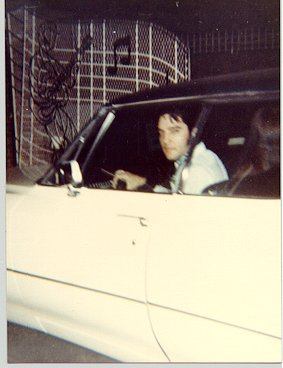
As has been reported and discussed many times in the past, Springsteen went to Graceland in 1976 after playing a concert in Memphis. He wanted to see if Elvis was home and jumped over the wall and made a run up to the house before being stopped by a security guard.

This is the version Springsteen relayed to Rolling Stone in 1977, “When we played Memphis, we decided we wanted to get something to eat after the show. We told the cab driver, take us some place quiet. He said, ‘Are you guys celebrities?’ Yeah. So he said he’d take us out along the highway by Elvis’ house. I said, ‘You gotta take me to Elvis’ house.’ He says, ‘Do you mind if I call the dispatcher and tell him where we’re going?’ So he calls the guy and says, ‘We got some celebrities here. We got…’ and he shoves the mike in my face, so I say, ‘Bruce Springsteen.’ They didn’t know who I was, but they were pretending to, you know? He told the dispatcher, we were going to Elvis’ house; he was crackin’ up because the dispatcher thought we were going to drink coffee with Elvis.”

In the novel, The Great Gatsby, Jay Gatsby would walk out into the darkness of his yard at night and stare off into the distance at a green light at the end of a far away pier that turned out to be the house of his long-lost love, Daisy. That green light symbolized his hopes and dreams of pure love for which he stretched his arms out in an attempt to make it real. In the novel, the green light plays a mysterious, recurring role and it comes to symbolize the American Dream itself. Jay Gatsby, originally from South Dakota, turned himself into a wealthy, cosmopolitan New Yorker. Gatsby’s life story and the green light created a new sense of identity in a new place reflected all individuals and the power of their dreams. On that night in April 1976 in Memphis, Tennessee, Springsteen said he saw a light in a room on the second floor and thought for sure that was Elvis sitting up reading and, just like Gatsby drawn to the green light, Bruce was drawn to Elvis’ light and his own dreams.

At the time of Springsteen’s magical run while chasing his dream, the physical surroundings of the area would have been dark at 3:00 am. And, Graceland is on a hill and it was out on the edge of Memphis at the time. Graceland is in the Whitehaven part of Memphis on the south edge of town, several miles from Memphis proper. At one time, Whitehaven was its’ own municipality, but has been annexed by Memphis as the area has grown since Elvis passed away. So, it’s not difficult to imagine Graceland as being in the darkness on the edge of town.

Now I hear she’s got a house up in Fairview

Written to give the impression that the “she” is doing financially well and living in a nice area with a style she’s trying to maintain. To Elvis, buying Graceland in 1957 constituted fulfilling the dream of a better life and taking care of his parents. But when you look at the house and see beyond the four columns out front, it’s really just a big house that pales in comparison to the houses celebrities and power brokers live in today.

Everybody’s got a secret, sonny

Something they just can’t face

Some folks spend their whole lives trying to keep it

They carry it with them, every step that they take

In the recording, there is a discernible jump in music level and intensity, and plays as the wish that Elvis could have shaken his secret of drug abuse and cut it loose because it dragged him down and led to his untimely and premature death. After the second verse, Springsteen exhales a series of grunts along with jangle of a tambourine that sounds like chains and gives the impression of someone tied with chains struggling to walk, like they are carrying the ghost of their past and their sins up that hill. When Elvis started recording music and made his way up the hill of Graceland, he did so while carrying a lot of chains: the chains of prejudice, the chains of poverty, and the chains of self-doubt.  Also, Sonny West was Red West’s cousin and fellow friend/body guard to Elvis who co-authored Elvis: What Happened?. Perhaps Sonny West can be taken as the “sonny” in these lyrics.

Some folks are born into a good life

Other folks get it anyway, anyhow

Springsteen could be writing about both Elvis’ and his own very humble background and how they both worked to grab the good life, the American Dream through the only means they knew how, rock and roll.

I lost my money and I lost my wife

Elvis’ divorce of Priscilla and paying money as part of legal settlement haunted him daily and led to him picking very telling songs to record such as Hurt, It’s Midnight, I Miss You, and For Old Times Sake.

Of special note, Elvis’ last studio recording album, Moody Blue, was released in July 1977, just weeks before his death, and the last track is titled, ‘It’s Easy For You’ The song, written by Andrew Lloyd Weber and Tim Rice, and recorded in 1976 amidst his traumatic breakup with long time companion Linda Thompson and the recent firing of long time friend and bodyguard Red West, contains lyrics that seem written just for Elvis. If you listen to the recording, you can hear Elvis’ voice literally cracking with emotion as he sings the story of couple’s breakup:

You might not mind that it’s over

But I’ve got a different point of view

Even though I am shattered

It’s easy for you

You don’t have to face the music

You don’t have to face the crowd

I had a wife, I had children

I threw it all away

I found it hard to leave them

The saddest thing I ever had to do

According to Ernest Jorgensen’s Elvis Presley a Life In Music, after the line “I threw it all away’ Elvis ad libed ‘I get carried away/Emotional son of a bitch’ Appears as self-effacing recognition of his own behavior and the effects it had on those closest to him. Listen for yourself by clicking on link below:

http://www.youtube.com/watch?feature=player_detailpage&v=HHqVPxvJQbw

Tonight, I’ll be on that hill, because I can’t stop

On the night Springsteen jumped the wall at Graceland, he said to Steven Van Zandt who rode with him in the cab, while they were standing by the music gates looking up at the house, that he “just had to go up there and see if Elvis was home.”

I’ll be on that hill with everything I got

Lives on the line where dreams are won and lost(literally as in Elvis dying)

I’ll be there on time and I’ll pay the cost

ie riding in a taxi with the meter running being the time and the cost is the fare for cab ride out to Graceland. Springsteen is singing about both Elvis own journey up that hill to Graceland, literally and figuratively, and about Bruce jumping the wall and trying to follow in Elvis’ footsteps.

For wanting things that can only be found,

In the darkness on the edge of town

Taxi Cab, Taxi Cab, City of Night: Let’s cross that river, to the other side

I imagine that in the sequencing of The Promise, Springsteen recognized a need to end on a more uplifting note than the second to last track, The Promise song. After the  rock bottom despair of The Promise and ‘something dying down on the highway tonight’, City of Night ends on a more hopeful note with the line, ‘Some people wanna die young and gloriously/ Taxi cab driver, well that ain’t me’ . The recording begins with a sound of whirring distortion, akin to the Beatles’ use of guitar reverb on I Feel Fine, which comes across as purposeful fast forwarding in time to a better place, a wrinkle in time. Sonically, the music is pure Stax studio, based in Memphis, and Springsteen’s nod to the great backing musicians in studio and recording artists that greatly influenced him, ie Otis, Sam and Dave, Eddie Floyd, Arthur Conley. The music might as well have been played by Booker T and the MGs, including the Memphis Horns. This song plays to me as a coda, a light touch acknowledgment of riding in a cab to Graceland and one last love letter to the musicians who inspired him.

I got some money and I’m feeling fine

This is the post concert rush he was still coming down from at 3:00am when they took the cab ride out to the edge of town.

Some people want to die young and gloriously

Taxi cab driver, well that ain’t me

Springsteen is being ironic with Elvis Presley’s death as yes, Elvis was only 42, but it was not a glorious death.

Further Darkness and The Promise Elvis tie-ins: ‘I got my facts learned real good right now’

Badlands:

Poor man wanna be rich/Rich man wanna be king/and a king ain’t satisfied until he rules everything/ I wanna go out tonight/I wanna find out what I got

The first three lines are taken from Presley’s recording of King of The Whole Wide World from the Kid Galahad soundtrack.

Johnny Bye Bye , which appeared as the B side on I’m On Fire single, originally started as Come On(Let’s Go Tonight) and contains the lines

Hey little girl with the red dress on

There’s a party tonight down in Memphis town

I’ll be going down there if you need a ride

The man on the radio says Elvis Presley’s died

Echo of Elvis’ 1967 cover of Tommy Tucker’s Hi Heel Sneakers which includes the line ‘put on your red dress baby, cause we’re going out tonight’

Springsteen used the image of the red dress again on this years Wrecking Ball album on the song, Easy Money, with the line ‘Put on your red dress, looking real good honey’

Fire

Springsteen has stated he wrote it specifically for Elvis and wanted to try to get Elvis to record it. The song would have fit neatly among Elvis’ other ‘hot’ songs, Burning Love and Fever, Peggy Lee’s big hit. Springsteen’s Fire echoes the lyrics of Fever with use of Romeo and Juliet, but instead of Lee’s Captain Smith and Pocahontas, Springsteen inserts Samson and Delilah as famous lovers. The lines ‘My nerves all jumping acting like a fool’ and ‘Your kisses they burn but your heart stays cool’, while not directly from Presley’s earlier works All Shook Up and Burning Love’, are very similar in lyrics to Presley’s songs, but don’t directly borrow from them. Springsteen’s guitar solo in the middle of Fire is a very close approximation of how James Burton, Elvis’ regular tour guitarist in the TCB band and, often times, lead studio guitarist, would have played it if Elvis had recorded the song. In fact, the whole E Street Band is playing parts as if they were laying down a demo for Elvis’ band, as I can hear very distinct parts for how all of the TCB band would have played including bass lines of Jerry Scheff, Glen Hardin piano and Ronnie Tutt’s drums.

Wrong Side of the Street

Springsteen’s singing ‘darlin’ in line ‘We’ll bring an end darlin’ very similar to Elvis singing words ‘Oh my love, my darlin’ from Elvis’ version of Roy Hamilton’s classic, Unchained Melody. Elvis’ version was released on Moody Blue which came out in July 1977, weeks prior to death

Spanish Eyes

Has very similar sound and lyrics to Elvis’s cover of the Al Martino hit of the same title. Elvis recorded in 1974 for The Good Times release. Same Latin tinged samba beat, mariachi guitar and horns as other Presley songs such as It’s Now Or Never and Fools Rush In.

Be True: The Promise of Springsteen

In 1980, Springsteen told rock critic Robert Hilburn, “You can’t live on what you did yesterday, or what’s going to happen tomorrow. If you fall into that trap, you don’t belong on stage. That’s what rock and roll is: a promise, an oath. It’s about being as true as you can at any particular moment.” While Elvis began phoning it in on stage periodically in voice, mind and effort, and sometimes openly disdained his audience, Springsteen has been giving it all he can on stage, night after night. He pushes himself and the band, through three to four hours of non-stop performance which includes song after song rolling into each other with little to no break in between, jumping from pianos and amplifier stacks, and sliding across the stage from one side to the other. All the while, he sings, plays guitar and piano, leads the band, fires up the crowd and preaches to the congregation.

One of Elvis Presley’s biggest fans, Bruce Springsteen, has become one of the leading rock artists of his time, because he learned from all of his heroes throughout his life and career. Springsteen once said, “I believe that the life of a rock and roll band will last as long as you look down into the audience and can see yourself and your audience looks up at you and can see themselves, and as long as those reflections are human, realistic ones.” In 1965, Elvis met the Beatles  at his Bel Air home and the five of them spent  a few uncomfortable hours making small talk and playing a little music. Elvis was too racked with self-doubt and low self-esteem around the four Liverpool Lads who had stormed America, and the Beatles were in awe being in the same room with one of their idols. Springsteen has long played in concert with many of his inspirations such as Sam Moore, Darlene Love and Chuck Berry, and now, he is returning the favor to those who grew up idolizing him such as Brian Fallon of Gaslight Anthem, The Dropkick Murphy’s and Eddie Vedder to name a few. He allows those younger musicians an opportunity to make a human connection, to “make that dream real.”

That is the key difference between the two: Elvis’ artistry ended at a certain point in time, but Springsteen has continued to grow as an artist and as a performer. At the end of Elvis’ career, he could no longer look into the faces of his audience and see an accurate reflection because he could no longer see himself. Every night that he is on stage, Springsteen looks into the faces of his crowd and makes connections with the eyes and minds of his fans, brings fans onto stage to dance and sing, gets help on vocals from younger fans on Waiting on a Sunny Day, and in the penultimate connection, literally puts his body and faith in the hands of his people by crowd-surfing from the back of the pit area back to the stage.  Springsteen puts his faith in his fans, and as they pass him forward, hand over hand, they repay that faith and belief in the promise of rock and roll a thousand times over.

Long ago, Springsteen said of trying to meet Presley at his home, “Later on, I used to wonder what I would have said to him if I had knocked on the door and if Elvis had come to the door. Because it really wasn’t Elvis I was going to see, but it was like he came along and whispered some dream in everybody’s ear and somehow we all dreamed it.” Just recently, Springsteen told David Remnick of the New Yorker of his performances,”It’s theater you know. I’m a theatrical performer. I’m whispering in your ear and you’re dreaming my dreams, and then I’m getting a feel for yours. I’ve been doing that for 40 years.” The student has learned well from his best teacher.
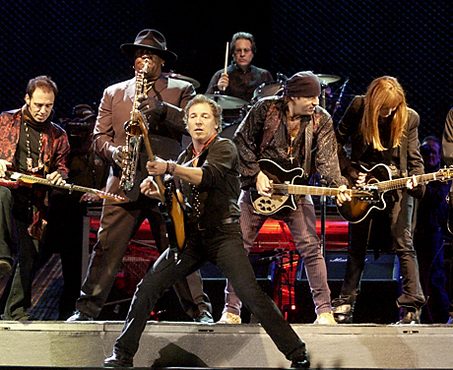
(Coda) Elvis Presley: ‘A man with a vision, in search of a vision’
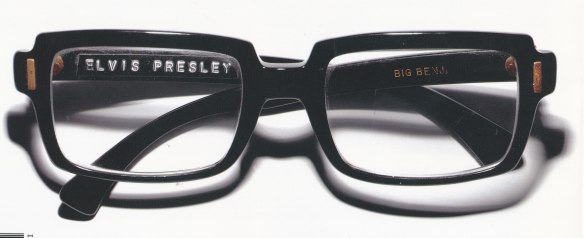
“It was like he whispered a dream in our ears, and then we dreamed it,” the Elvis acolyte Bruce Springsteen once said. What was in that dream was the best part of us, the best of the American dream- which by the last 20th century had become a big part of the world’s dream too. You could declare that dream an impossible fantasy or you could accept it as a challenge, but either way, you knew going that route would cost you as much as you had in you. Reality got in its way for Elvis, just like for you and me. Still, he dreamed that dream, and more than that, he shared it with everyone else. Like a child, the dream went places its creator could not have imagined, fostered alliances Elvis might not have liked, took on a look he could not recognize as his own. Elvis’s greatest gift to the world may have been allowing us to see so much of him in ourselves.” Dave Marsh, Elvis

Elvis is Everywhere, Mojo Nixon

When I look out into your eyes out there,
When I look out into your faces,
You know what I see?
I see a little bit of Elvis
In each and every one of you out there.

Elvis is everywhere, man!
He’s in everything.
He’s in everybody…
He’s in the young, the old,
the fat, the skinny,
the white, the black
the brown and the blue
people got Elvis in ’em too
Elvis Presley Sings The Promise

In an alternate space-time continuum, back in March of 1976, Elvis wasn’t in Tahoe and was sitting in his room reading and met his young, ‘crazy fan’ downstairs in the kitchen and shared some coffee and cheeseburgers while they talked music. One thing led to another and pretty soon, Elvis was back in the studio and singing some new songs written by a young upstart rock and roll singer named Bruce Springsteen. The following are the songs from The Promise Album that seem perfect for Elvis’ mood, song selections, arrangements, production styles and vocal phrasing and style at the time:
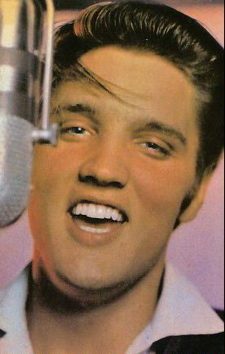
The Book of Love

  1. The Brokenhearted(Heartbreak Hotel Part II)
  2. Fire
  3. Breakaway
  4. Someday(We’ll Be Together)
  5. One Way Street
  6. Gotta Get That Feeling
  7. Save My Love
  8. Rendevous
  9. Spanish Eyes
  10. Candy’s Boy- “..there are pictures of her heroes(Elvis?) on the wall….”
  11. Outside Looking In
  12. The Little Things(My Baby Does)
  13. The Promise(Upon hearing Elvis sing this song, this writer’s head just exploded)

Quotes and notes

“There is something magical in watching a man who had lost himself find his way home.” Jon Landau after watching NBC’s Elvis (The 68’ Comeback Special)

Springsteen on Presley, “That Elvis man, he is all there is. There ain’t no more. Everything starts and ends with him. He wrote the book. He is everything to do and not to do in the business.” Mike Greenblatt, The Return of the Native Son, 1978.

Springsteen on Presley, “I could not imagine that guy dying. He was so incredibly important to me, to go on and do what I want to do. When I heard the news it was like somebody took a piece out of me.

He was not primitive, like people think. He was an artist and he was into being an artist. Of course he was also into rockin’ his ass, but that was part of it. Onstage, he encompassed everything- he was laughing at the world, and he was laughing at himself but at the same time, he was dead serious.

To me, he was as big as the whole country itself, as big as the whole dream. He just embodied the essence of it and he was in mortal combat with the thing. It was horrible and, at the same time, it was fantastic. Nothing will ever take the place of that guy.” Rolling Stone, 1977
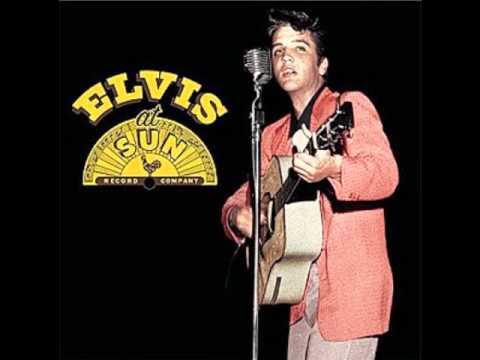
Interview with Bruce circa 1988, heard on George Klein’s radio show.

Interviewer: You usually end your concerts with the line, let freedom ring. Do you think a big, strong musical message can make that happen?

Springsteen: I think so. I think Elvis did. You can look around and say there’s still a lot of trouble in the world, and there’s still so much injustice. But I think Elvis did and I think it helped a lot of people. I know it helped me. It made me a different person.”

“The world awaits the next Elvis. We’re hoping to find a flesh and blood superhero. A regular guy who changes the world and, in the process, shows us all how to change with him.”  Dave Marsh

In the introduction to the Darkness box set, Springsteen writes, “Post ‘Born To Run’ I was still held in thrall by the towering pop records that had shaped my youth and early music education. Echoes of Elvis, Dylan, Roy Orbison, the full-voiced rockabilly ballad singers of the Fifties and Sixties along with my favorite soul artists and Phil Spector, thread throughout. As I page through my 37-year-old “Darkness” notebook, I see a young man filled with ambition, a local culture/B movie fueled florid imagination, and thrilled to be a rock’n’roll songwriter. The nights of listening to Lieber and Stoller. Goffin and King, Barry and Greenwich, Mann and Weil, the geniuses of early rock’n’roll songwriting had seeped into my bones. Their craft inspired me to a respect and love for my profession that’s been the cornerstone of the writing I’ve done for the E Street Band and my entire work life.”

Notes

Lead quote from Presley fan Myrtle Smith, Rolling Stone 9/22/77. She explained to the journalist why she and 30 of her friends had jumped in their car upon hearing the news and drove to Graceland

Man with a vision- In The Promise documentary, Jon Landau stated that, “Bruce is a man with a vision, but at the same time, he is in search of a vision. And that is what each album is.”

Elvis doesn’t die- “I’ve never been through anything like that before. Myrna(Smith of Sweet Inspirations) broke down and cried as hard as I’ve ever seen a woman cry. We were all so shocked.” quote from John Wilkinson, Elvis’ TCB Band rhythm guitarist on hearing the news of Elvis dying while the band was travelling to Portland, Maine for the first show of a new Presley tour.

Two things happened during Darkness- Taken from Darkness special 11/2010 on Sirius/XM E Street Radio when a fan asked what Elvis’ death impact had on the songs during recording “….that’s very interesting question because I think people forgot that Elvis died. The two things that happened were the punk explosion and Elvis died. It had a big impact on me at the time. No one has asked me that question in all the interviews I have done. I don’t think it affected the album in any way. The song ‘Come on, Let’s Go Tonight’ is a song about going to Memphis for Elvis’ funeral. So, I did begin to write something about it. And that song turned into Factory.

Elvis Presley’s boyhood home, Tupelo, Ms

In memory of Dennis Renner, my friend

By Ryan Hilligoss, May 2012

My father in law Dennis Renner passed away May 23, 2012. Below are comments I delivered as a eulogy at his memorial service.

Over the 15 years I knew Dennis, I did a lot of listening to his hunting stories, plans on planting his garden, his latest airplane project he was working on and countless other topics. And over that time, I listened a lot and spoke very little in our conversations, always deferring to the power of his personality and his gift for gab. So, now it is my turn to talk for a time, with the permission of Pat and the family.

After 72 years, what can be said about him that you don’t know or haven’t already heard? I know this, Dennis was a good and decent man who did the best he could with what he was given to live a good life and to provide for his wife and 4 kids and to help his grandchildren as much as he possible. I know this, that the measure of a person can be counted in many ways, but the most important is how they treat others as they go through life. And Dennis Renner treated me like a son and for that I will forever be grateful.

But sometimes, the best way to know someone is to find out about all the small things that make up a person’s life. He loved to watch his kids and grandchildren play sports. He loved to hunt and fish. He always carried a pocket knife in his front pocket and a handkerchief in his back pocket. He read National Geographic and Civil War magazines. He loved to watch old Western movies and countless reruns of Gunsmoke. He was always up for Friday night fish fry or Sunday morning breakfast buffet at the local VFW. Don’t ask me why he did this, but when he ate with a fork, he turned the fork sideways as it entered his mouth. He usually sat on the edge of a chair or couch with his arms crossed over his chest and his hands under his armpits. He loved to sit for hours at a time and work on his remote-controlled model airplanes. When one of his kids fell down and skinned their knee and cried, he would say, “Oh, you’ll be OK, it’s far from your heart.” He collected coins and stamps. He loved to work in his garden planting vegetables. He would go into the post office and shoot the bull with the postal clerk for 15 minutes on the simplest of topics. He made most of the people he encountered on everyday errands feel like they were important and special, because to him they were important. If he did or said something that you didn’t like, he would say in a matter of fact voice, “Well, nuts to you then.” Or else he would put his hand up to his nose and wiggle his fingers.

Speaking of which, I have been speaking for only a few minutes now, and if he were here with us, he would have told me to put a sock it in by now.

Each time someone passes from my life, I like to hold onto a few memories that help me remember them by. So here are a few about him.

The first time I met Dennis was 15 years ago and it was an inauspicious start. Kim and I met while attending Eastern Illinois University and Kim took me to her parents’ home on Anderson Boulevard in Geneva, yes the big house with the neon blue siding, to visit and meet her parents during a weekend trip. When we arrived, Dennis had already gone to bed since he got up so early for his job at the post office so I visited with Pat for a while and then got ready for bed.  After brushing my teeth, I exited the bathroom and there before me stood a grizzled bear of a man standing rather impatiently in his pajamas. And when I say the word pajamas, I use the term loosely as his “pajamas” consisted of an undershirt and underwear. I was rather embarrassed and a little put off to say the least, but being true to his character, he couldn’t possibly have cared less that he was standing in his underwear while meeting his daughter’s boyfriend for the first time. So, in one sense, he and I started out at the bottom, and over the years, we worked our way down from there.

Once he retired from the post office, he got onto a remote control airplane kick. He was very meticulous about his obsessions and this was no different. He ordered a subscription to a model airplane magazine. He got catalogs from many suppliers. He did research at the hobby store for hours at a time. And then very carefully, he ordered just the right plane, painstakingly assembled it in the basement and found a local club at which he could fly his new prized possession. On the very first time he flew the plane, he took the controls, got the plane down the runway and up into the air for a successful flight that lasted roughly 30-60 seconds because as the plane went up he turned to controls to swing it back around for a quick landing, the plane went right into the path of the sun and he became blinded by the sunlight, he lost control and the plane crashed to the ground. Despite the fact that he built several more planes over time, he returned home that day with his tail between his legs and never flew another plane again.

This last one was something straight out of a Three Stooges movie short or a Looney Tunes cartoon. While he was visiting us one day at our home, I told him about a hornet’s nest I had found earlier that day in our backyard along the fence. He of course went straight to the backyard and stuck his proverbial big nose into the hornet’s nest. He looked it over for a few minutes and the decided it was best to knock it down and mash it with his size 12 foot. Now, Dennis being Dennis. he didn’t always think things through and this was a perfect example. After he knocked it down, hornets started to buzz around him and he lit out for safety in a heartbeat. As many of you know, Dennis was a big man and didn’t move very fast, but at that particular moment, I have never seen anyone move as fast as he did. One minute he was standing there by the fence and the next moment he was rushing back to the house in 3 or 4 huge bounding leaps with his belly bouncing up and down with each step. Once he was back to safety and now gasping for breath, being the reflective guy that he was, he said to me, “Maybe that wasn’t such a great idea.”

Despite the facts that he travelled all over the world while serving in the Navy and lived for many years in Geneva, Dennis was a country boy at heart, from start to finish. He often told me stories from when he was a kid of hunting and fishing with his brother and how much he enjoyed just being out in the open, in the fresh air. He hunted and fished his whole life including turkey hunting just last fall in Wisconsin. Much like Captain Ahab from Moby Dick in search of the great white whale, on every hunting trip, he was always on the trail of that ever elusive great turkey that he could bring home and show his family and friends with pride. So, knowing that the outdoors was where his heart lay, and with the fact that Dennis looked a lot like Walt Whitman, I would like to read this excerpt from Walt Whitman’s Leaves of Grass:

I depart as air…

I bequeath myself to the dirt to grow from the grass I love,

If you want to see me again, look for me under your bootsoles

You will hardly know who I am or what I mean,

But I shall bring good health to you nevertheless

Failing to fetch me at first, keep encouraged,

Missing me one place, search another

I stop some where, waiting for you.

As we go through life, we collect a wide assortment of human souls around us, whether they be by blood or friendship, and once they are gone from us, they can never be replaced, no matter how much we try. Dennis was many things in life to many people including a son, brother, husband, father, grand-father, uncle and father in law just to name a few, but what I will miss most is my friend.

So, in summary, I’ll miss his friendship, the force of his nature, his foolishness, his stories, his face, his hands, his humor, his laughter, his love of life, and that ever-present twinkle in his eye. His love and the spirit of his memory will carry on because as long as we’re here and you’re here, then he’s here, at least through the stories, memories and the shared experiences that he loved to do during his time here. So instead of saying goodbye to my friend, I will just say, I’ll see you further on up the road. (Last paragraph contains parts of Bruce Springsteen’s eulogy to his dear friend and E Street Band member, Clarence Clemons)

Goodbye Albert: Arch Fans Bid The King Adieu(Apologies to John Updike)

By Ryan Hilligoss, March 2012

pujols-legacy-greed-575x414

“It’s part of my responsibility(being the face of a franchise) to play the game the right way and be an example to the community and to kids who look up to me, just like when I was a little boy and looked up to big league players. I know how many kids out there want to be like Albert Pujols.” Pujols, Sports Illustrated March 2012

Musial statue

Picture this: 1955. St.Louis, Missouri. A hot, suffocating, August afternoon. A steaming, asphalt parking lot outside Sportsman’s Park. A family of 4 from Springfield, Il on their annual vacation trip to St. Louis for a river cruise on the once mighty Admiral and taking in a Cardinals game. A mother and father, hard-working people from central Illinois, and their 2 daughters aged 12 and 15. There are a lot of fans waiting to talk to the players after the game and seeking autographs. At long last, Stan Musial, the man most have been waiting for emerges from the clubhouse and starts to talk to the fans who have come from far and wide to see their hero play. After playing hard in the hot afternoon sun, the easy thing would have been for Stan to beg off, plead exhaustion from the heat and head home to his family. But, he didn’t take the easy way out, he never did. He makes his way around the crowd shaking hands, saying hello and taking time to talk with each and every one of the faithful who waited.

The family from Springfield patiently waits their turn and are elated when he finally makes his way to them. After signing autographs on the day’s scorecard and exchanging pleasantries about their vacation, Musial asks them what hotel they are staying in, and knowing it is several blocks away and it is a usual oppressive St. Louis day, the star offers them a ride in his car to the hotel to spare the girls a long, hot walk. The father, a proud and humble man, thanks the star but declines the offer stating the family will enjoy the fresh air. Stan waves goodbye and climbs into his shiny red car and exits the parking lot. That family was my mother Donna, aunt Glenda, and grandparents Hubert and Ivy Barr. My mother and aunt talk about that memory often, and the kindness and decency of Musial is what they remember after all these years and that is where they leave him in their mind’s eye.

Saturday Post Musial

And in my mind’s eye, I begin thinking of a new baseball season, a new team and the idea of heroes. My hopes begin to rise with spring training in full swing and a new season starting for the Cardinals April 4th against the re-designed Marlins in their newly christened stadium in Miami. The 2012 Cardinals will look a lot like last year’s team. The old workhorse Chris Carpenter will be back at it again, pitching and playing a hard game every time it’s his turn. Adam Wainwright will be a sight for sore eyes having missed last season due to Tommy John surgery. Last year’s WS MVP David Freese will be back at the hot corner. But for the first time in years, 1st base will be handled by someone other than Albert, as Lance Berkman takes over for the departed Pujols. The “King” has truly left the building.

At the time of this writing, it has been 150 days since the St. Louis Cardinals played and won one of the greatest single games of baseball ever played, Game 6 of the 2011 MLB World Series. It has been 149 days since the Cardinals won Game 7 and took home the World Series crown, the 11th in their long, storied history. But after the victory parade was over, the ticker tape was swept up and the joy faded away. It has been 108 days since Albert Pujols left his perch here in the town of the Birds on the Bat, and flew to sunny LA to join the Angels.

Hope springs eternal with the dawning of a new day that comes with spring training. And just like Lazarus of old, the dead and forgotten Cardinals of August 2011 rose from the dead and fought back to take the crown, fighting past the mighty Phillies, Brewers and Rangers.  This typifies the kind of organization they have always been and will continue to be. St. Louis isn’t a sparkling jewel of the nation. It’s a hard town filled with hard-working, hard hit people. But we fight it out, and we’ll be here tomorrow and the next day and the next, just like the Cardinals, and we will stand together as a testament of the faith we hold in each other. While Albert is soaking up the warm rays of sunny Anaheim, we’ll be here where the warmth comes from within.

The easy out would be to say that I knew he was going to leave. But the declaration would just be that: an easy out. And I would be trying to fool myself and others .Within days of the World Series victory, I spoke to Sam Madonia on Springfield radio and I declared, in childish foolishness and naïveté that I thought both Albert and Tony Larussa would both be back. How wrong could I be? I really thought Albert would stay and finish his career here as a player. And then once retired, he would be handed the keys to the organization by ownership and asked what he wanted to do whether it be manager, GM, scouting, etc. With his innate and brilliant knowledge of the sport and his incredible abilities, I imagined him being a player-manager at the end of his career just like Frank Robinson and then transitioning to full-time manager. Albert Pujols as a manager would have upheld the level of excellence of the organization and of his own career.

But that was just the wishful thinking of a naive and romantic kid at heart. A romantic who was an 8-year-old second grader at Irving Elementary School in Alton, IL when the Cardinals won the World Series in 1982. A victory that ended with Bruce Sutter jumping into the waiting arms of his catcher, Darrell Porter. The next day, our school held our own “victory parade” and each class got a moment of freedom during which we paraded through the historic surrounding neighborhood high above the Great River Road.

In my jumbled memory, I remember the day as being cold and rainy outside with wet leaves under our feet in the late fall. But we didn’t care how cold it was outside; we carried the warm glow of victory in our hearts and “romantic dreams in our heads.” We did not really understand what it all meant, if anything, but we had a sense that all was right and true in the world. We held onto innocence, but we also held an idea of the promise of having all the time in the world before us. But what we didn’t understand is something the modern American poet Bruce Springsteen wrote in his song The Promise:

When the promise is broken you go on living

But it steals something from down in your soul

Like when the truth is spoken and it don’t make no difference

Something in your heart goes cold

When you consider the following quote from Albert from a 2009 interview, it is an example of promises being broken and turning your heart cold. “Do I want to be in St. Louis forever? Of course. People from other teams want to play in St. Louis, and they’re jealous that we’re in St. Louis because the fans are unbelievable. So why would you want to leave a place like St. Louis to go somewhere else and make $3 million or $4 more million a year? It’s not about the money. I already got my money. It’s about winning, and that’s it.” In the end, that is exactly what he left St. Louis for, a few more million dollars a year.

It’s about the winning? What other organization in MLB has had the success the Cardinals have had since 2000? 3 trips to the World Series including 2 victories. Postseason trips 8 of those 12 years including 4 losses in the championship series.

After signing with the Angels, Pujols was quoted as saying that it was about the commitment of the Angels and not about the money. Apparently, Albert didn’t care for the “rough” treatment he received from Cardinal management including Bill Dewitt who was somewhat hesitant to offer a 10 year deal to a 32-year-old player which would have hamstrung the organization for years. I am going to go out on a limb and say it was probably about the money.

I have heard countless fans and pundits and “experts” weigh in and say that modern sports is just a business and Pujols made a business decision. They say this is just the way it is now. But it doesn’t have to be to that way. Just ask Cal Ripken, Tony Gwynn, Barry Larkin, Derek Jeter, Mariano Rivera or Chipper Jones. They all played for a single team their entire careers in the modern era. They all made conscious decisions to remain with the same team and the same fan base their entire careers. Sometimes, the call of home, the sound of peace and silence, is louder than the frantic din of the all mighty dollar.

In 1968, Simon and Garfunkel released their signature song, Mrs. Robinson. The song, originally titled Mrs. Roosevelt as an ode to Eleanor Roosevelt, shot to #1 on the record charts and later won them a Grammy. An earlier version was released the prior year as part of the classic movie, The Graduate. In the song, Paul Simon wrote the lyrics:

Where have you gone Joe Dimaggio

Our nation turns its lonely eyes to you

What’s that you say Mrs. Robinson

Joltin’ Joe has left and gone away, hey hey hey

Apparently, Joe Dimaggio, who never suffered from a great sense of humor or irony, did not care for the lyrics or the song. Dimaggio told many friends, “Damn it, I didn’t go anywhere, I’m right here.” Paul Simon meant the lyrics as a tribute to the baseball legend and what he represented to so many. Simon later explained to Dimaggio himself at a restaurant that “the line was meant as a sincere tribute to his unpretentious heroic stature, in a time when popular culture magnifies and distorts how we perceive our heroes.”

When Dimaggio passed away in 1999, Simon wrote the following in an obituary in the New York Times: “In the 50’s and 60’s, it was fashionable to refer to baseball as a metaphor for America, and DiMaggio represented the values of that America: excellence and fulfillment of duty (he often played in pain), combined with a grace that implied a purity of spirit, an off-the-field dignity and a jealously guarded private life. It was said that he still grieved for his former wife, Marilyn Monroe, and sent fresh flowers to her grave every week. Yet as a man who married one of America’s most famous and famously neurotic women, he never spoke of her in public or in print. He understood the power of silence. ”

dimaggio_joe_h2

As a longtime St.Louis Cardinal fan, left bereft at the leaving of slugger Albert Pujols, I would like to revise Simon’s lyrics to fit the situation by writing, Where have you gone Albert Pujols/Our Cardinal nation turns its lonely eyes to you/What’s that you say Mr. Dewitt/King Albert has left and gone to LA? Hey hey hey…..

In August of 1977, after the passing of Elvis Presley, noted rock critic Lester Bangs wrote a great essay for the Village Voice in which he lamented the solitude that the singer lived in as well as the solitude of all music listeners who no longer could, or would, en masse follow any one singer or group. Where once millions of fans had followed Elvis’ music, Bangs imagines a world where everyone listens to their own favorite artists with little or no connection to other fans or other music styles. In one of the greatest, most prescient lines of popular, social criticism ever written, Bangs wrote, “But I can guarantee you one thing: we will never again agree on anything as we agreed on Elvis. So, I won’t bother saying goodbye to Elvis. I will say goodbye to you.”

The passion, the memories and the thrills started with my grandparents and were handled down to my parents and down to me and my two bothers, and now in turn, they are being passed down to our kids. What has been handed down from generation to generation is an appreciation for excellence and a high standard of character. So, as a life long, multi generational fan of the second most successful MLB organization, I can say that we Cardinal fans have stuck through the good times and bad times over the course of the club’s long and storied past. I can say that we appreciate Albert for what he did while he played here and for being a part of 2 World Series Champion teams and several other pennant contenders. But we also appreciate the efforts of all the players that helped win those games and championships. We appreciate players like the inimitable Stan Musial, Bob Gibson, Lou Brock, Ozzie Smith, and Willie McGee and countless others who come back time after time for opening day ceremonies, post season pre game festivities, and appearances in the broadcast booths. And they are treated as baseball royalty and as St. Louis royalty.

St.Louis royalty- Lou Brock, Red Schoendist, Ozzie Smith, Bruce Sutter and Bob Gibson

They are treated as such not simply because they played and won games from our youth and our adulthood, but because they represent a link to the past, the collective past of them and us. A link to where we came from, where we are today and where we are going and all the miles in between. Through good times and bad, we’ve been here. Season in and season out, we have risen and fallen with the Cardinals. Just as the players carry a burning desire to win and play the game right, our hopes and desires are carried deep within and hold a special place in our heart. And we continue to stand ready, waiting for the next Lou or Ozzie or Stan or Yadi to come to the plate and bring home another championship.

We follow the fortunes and failures of the collective team, not of a single player. And so Albert, instead of saying goodbye to our former selves, the promises we made, and all the memories and hopes and desires we each carry every day. Instead of saying goodbye to all that is right and true about this town and this incredible baseball organization, we will say thanks for the memories, wish you well and say goodbye to you.

We are alive. We will be here and waiting for the start of a new season. We may grow older with each passing season and our hearts may run a little cold from time to time as our heroes let us down and as tragedies fall upon us and those we love. But, with each passing season, we will hold onto another of Springsteen’s lyrics from a different song, No Surrender:

Now young faces grow sad and old and hearts of fire grow cold

We swore blood brothers against the wind

Now I’m ready to grow young again.

And so with the dawning of a new season, we will watch and listen to the games. We will once again go to Busch Stadium and share the experience with our family and friends. We will pass on the legacy and the memories to our kids just like those before have done. We will root on for our beloved Cardinals just as we secretly root on for the kids within ourselves that we used to be. And we will be ready to grow young again, even for a brief time.

There’s a new day coming. Tomorrow there will be sunshine and all this darkness past

Ryan, Kevin and Graham Hilligoss. St.Louis, Mo 2008


Editor’s notes:

– In September 1960, long time Red Sox great Ted “The Splendid Splinter” Williams retired from baseball with a .334 batting average and the last to hit the baseball immortal .400. Shortly thereafter, author and critic John Updike, a life long Red Sox fan, wrote one of the greatest baseball essays ever in Hub Fans Bid The Kid Adieu. You can read his words here by clicking on the link below.

http://www.baseball-almanac.com/articles/hub_fans_bid_kid_adieu_article.shtml

– I will leave the last word with one of Albert’s former teammates. Within weeks of Albert signing with the Angels, Skip Schumaker, who has always gladly done what has been asked of him including making the switch from outfield to second base, resigned with the Cardinals. In what I can only imagine as somewhat of a veiled rebuff against Albert, he was quoted by the St.Louis Dispatch as saying, “There’s always interest in the back of your mind about what else may be out there, but my agent knew where I wanted to be. This is where I’m comfortable. It’s pretty much a slam dunk for me. This is all I know. It was an easy call. Here, I know what I’m getting into. If you go to a new team, you don’t know. The majority of a really good team is coming back. These are good guys to play with. They’re good people. That’s something that’s very important within a long season.”)

Hank Says, or, All I Ever Needed to Know I Learned in China

(Editor’s note:  At the age of 70, and in a state of semi-retirement, my father Robert Lee Hilligoss, the original Humboldt, Illinois Tiger, traveled to China for a total of 30 days, with his fellow Mattoon High School alum and  friend, Henry Weaver.  On the way to O’Hare airport prior to departing America for points eat, Bob confessed to being as nervous as he was on his first day of school with Ms. Emily in her one room school-house in Coles County Illinois. Upon his return to America 30 days later, he said that much like Chuck Berry, he was so glad to be right back here in the USA. The following are brief excerpts from the upcoming one man monologue, much like Spalding Gray, sure to be coming to a theatrical venue near you. Check for local listings.)

The Humboldt Tiger goes to the land of the Flying Tigers

By Robert Lee Hilligoss (But we call him B.O.B)

What’s For Dinner? The Ballad of the Uneasy Eater

The food was different from the Chinese cuisine that I get at my local Chinese eatery, the China Star. Most of the food was very good. Some was very foreign to my taste. I found very little to be unacceptable. The one thing that I ate, which I wished I had passed on, was chicken feet. I discovered what my friend Hank had spent a year talking about was the noodles in soup, with meat, to be a delight to eat. Even though I could not manage the art of using chop sticks, there are spoons to be had, but forks are rare. Dumplings with meat or vegetables were delicious.
Surprisingly I was offered very little rice. Fish was good, but bony. They had one dish that reminded me of Buffalo Hot Wings, but they used unbreaded pork. Drinks, water, tea, Coke(with ginger) were always served, hot. I never
saw ice once in China until I boarded flight 850 to return to the states. The first request that I had for stewardess was a diet Coke with plenty of ice.

The Ways of the World : Trains, Planes and….taxis??

Travel by train, taxi or bus, I found to be comparable to train and bus travel in America. The best way to travel between major cities is by far to take a plane. The cost is very reasonable, an hour and 15 minute flight cost about 600 Yuan or $96, the planes are modern and the service staff is very good.

What You Really Need to Know (If you know what I mean)

Prepare yourself for some surprises when it comes to bathroom facilities. There is a thing called an Asian toilet, most Chinese people understand the word toilet. The Asian toilet is basically a hole in the floor, some are metal, some are ceramic. Every hotel I stayed in had a western toilet, but the shower in most have no tub or stall. There is a
drain in the floor below the shower head, and when you take a shower, you flood your bathroom floor, your ceramic tile floor becomes extremely slick and dangerous. The hotels that I stayed in, and the Lemon Hotel in Yan’an
was very acceptable, do not offer a simple wash rag(face towel). You use a hand towel.

I Depended on the Kindness of Strangers; An ode to Blanche Dubois

The most impressive feature that I found in China is the people. They tried to be as helpful as possible. Two young women that Hank and I met in St. Louis in 2010 helped us greatly by drawing up a list of questions written in Chinese. I have save that paper, and it is worn out. Everytime we were having a difficult time due to language, out came the list. It bailed us out several times. If we were having trouble with giving a taxi cab driver directions, a crowd always formed, and people tried to help out.

The people that I met and grew to know were the teachers at Yan’an Shaanxi Middle School(High School). They were top-notch individuals, the kind of persons that would be good neighbors and friends. They are hard workers and are dedicated to their profession of teaching. The students were an exciting group of young people that I enjoyed speaking to, at every opportunity that availed itself. They asked enlightened questions, and tried their best to speak English that was understandable. They were fun and interesting.

In My Life; All Those I Met Along the Way

Walking upon the ancient Great Wall was my greatest thrill. I have to thank Mr. Gao, Mr. Li, Andrew, Mrs. Li U Feng, Paul Prang, Jenny, Michelle, Mrs. Tree, everyone I met at the school for making my 24 days in Yan’an worthwhile. But without the aid of Clair, Veronica, Amy and Michelle, we probably would not have made it out of the Beijing Airport.

Why China? Because Hank Says

After my return, while substitute teaching at New Berlin High School, a student asked as to why I would choose to travel to China. I probably surprised him when I answered safety. The simple fact that there are people in the world that want to see Americans dead because we are Americans, no other reason. I have not heard of one American dying in China as a result of terrorism. The Chinese government knows as to who is in their country and where they are to be found. You buy a ticket for air travel, you present your passport and it is copied. You buy a train ticket, you present your passport. You check into a hotel, you show, guess what—–your passport. They know who is in THEIR country and WHERE you are located. Unlike America, they want to know just who is in country and where they can be found. A high school student in Yan’an asked me as to why I would choose to visit his hometown of Yan’an. I answered that I wanted to see the “real China”, not the post card version for the average tourist. Some of the people of Yan’an saw their first white man with blue eyes, when they saw me for the first time I walked the streets of Yan’an, Shaanxi. There was plenty to see, it centered around the simple fact that Mao Zedong lived in the Yan’an area from 1937 to 1951

Nehau!!!!

Bob flew back to Chicago in March and as we left the airport in Chicago on the way home, I cranked up some Chuck Berry music, as a welcome home and heard the pride of St.Louis, Charles M Berry sing these words:

I feel so good today

We just touched down on an international runway

Jet propelled from overseas right  back into the USA

Looking hard for a drive-in

Searching for a corner cafe

Where hamburgers sizzle on an open grille night and day

And the jukebox is jumping with records like Back in the USA

Uh huh huh, oh yeah…….

Editor’s note: My father, Robert Lee, retired in June of 2011 after teaching, off and on over a course of 47 years, for a total of 35 years in public school classrooms. He began in 1964 in tiny Westfield, Illinois, and then moved on to the metropoli of Divernon and Rochester before taking a 13 year sabbatical to work in the restaurant business before returning to the Divernon Dragons in 1990. During his career, he taught thousands in the classroom and hundreds more on the floor of the basketball gymnasium. He was a teacher and coach, but he taught his students and athletes much more than simply the dates of the Civil War or how to run a three-man weave. He taught them how to be better people. And he continues to teach as evidenced above.

Written by Ryan Hilligoss, March 2012

Mind Droppings and Honor Roll

Mind droppings, quotes of the week and honor roll

– “If I have seen farther than others, it is because I have stood on the shoulders of giants.” Isaac Newton

-“Fuel efficiency- not the availability of a gun rack- is one of the top purchase considerations for all new vehicles. However if accessories for the Volt are that important to Mr. Gingrich, we’ll gladly send him a product brochure.” Chevrolet spokesman Rob Peterson, on GOP presidential hopeful Newt Gingrich criticizing governmental subsidies and the lack of space for gun racks in plug-in electric cars.

-“I am strongly in favor of common sense, common honesty and common decency. This makes me forever ineligible for any public office of trust or profit in the Republic.” HL Mencken.

-” A book is just a stranger talking brilliantly. He’s probably better company than you’ll meet in a saloon. After all, he’s probably sober and giving you the best hours of his day, and he’s forcing you to look at things in a new way and face new experience.” Wilfred Sheed

General Honor roll:

– Jason Cochran.

His 8 year old son was charged with unlawful possession of a gun and third degree after a gun he has placed in his backpack went off at his school and the bullet struck a fellow student. The student is still recovering from her wounds but is expected to have a full recovery. Mr. Cochran stated, ” I just want everyone to know that my kid made a mistake. It was a terrible mistake.” During a difficult time for his son, the innocent bystander and all other involved, Mr. Cochran could have taken the easy out and blamed everyone else but his own son, as many others have done in past in similar situations. Instead, he stepped up and accepted responsibility for his own actions and those of his son.

– Students at Maine West High School, Des Plaines, Il. Families of Stephanie Valusescu, Christian Volkmann and Scott Wolf.

According to a recent story in The Chicago Tribune by Jennifer Delgado, fellow students at Maine West HS have rallied and supported each other as well as the families of the three above students who have all tragically passed away in last year. Volkmann suffered a heart attack, Valusescu died due to complications related to brain cancer and Wolf died earlier this month when he was struck by a vehicle. The  students helped support Volkmann and Valusescu during their times of trouble as well as their families and the students have rallied around each other at each turn.

Last year when the students learned that Valusescu’s condition was worsening and her family was struggling with the medical bills, they raised $18,000 to help. And they also stayed by her side in the hospital as much as possible.

Touchingly, during Volkman’s stay in the hospital after his heart attack last year prior to the school’s homecoming, his friends turned his hospital room into  his own “party” decked with the school colors.

The following is something we all could probably learn something from. Gina Valusescu, Stephanie’s mother, had this to say about the other students at the school, ” There’s a great thing going on at Maine West. When the worst things happen, they show the best of what people can be.”

Attached is a link to the full Trib story.

http://www.chicagotribune.com/news/local/ct-met-maine-west-student-deaths-20120304,0,6420344.story

Personal Honor roll:

– Kimberly Hilligoss- For all that she does for me as a wife, all she does for our kids and our family. Besides  that, she is quite the cook. She really makes cooking fun!!!

– Donna Hilligoss- For being my mom and fighting the good fight.

– Robert Lee Hilligoss- For having the courage to fly to China for a month , sharing his time and thoughts on America with hundreds of hopeful Chinese high school students and climbing the Great Wall. Not too shabby for a 70-year-old retiree originally from little old Humboldt, Il. Hank says……..

– Heather Nelson and Dave Buerstetta- For helping me get my humble, meager blog off the ground. If it weren’t for you two, I would still be pacing the floor and mumbling to myself instead of putting pen to paper….yikes, that is the Luddite in me speaking, rest easy Kurt Vonnegut…… I meant fingers to keyboard.

– Alabama Shakes- Looking forward to your new disc…giving old school soul, R&B a fresh voice.

Bruce Springsteen– For remaining a creative, developing artist who puts out timely, relevant music. For being a 62-year-old performer who still gives it 100% every night and who was willing to live in the moment and climb the rafters at the Apollo Theater last Friday ……onwards to the Land of Hope and Dreams.

The Wrecking Ball Comes to Thneedville

Bruce+Springsteen+Danny+DeVito+3rd+Annual+MDLGxSMMvcfl

Sprinsgteen and Danny DeVito, New Jersey Hall of Fame 2009, Glory Days

By Ryan Hilligoss, March 2012

Springsteen and Devito; The American Bard and The Lorax

In 2008, Bruce Springsteen was elected to the New Jersey Hall of Fame along with such luminaries as Albert Einstein, Toni Morrison, Harriet Tubman and Frank Sinatra. Springsteen was born and raised in blue-collar Freehold, New Jersey, but came of age, both physically and musically, in nearby Asbury Park, New Jersey. Also, from Asbury Park is actor Danny Devito who inducted Springsteen during the ceremony with these words,

” He(Bruce) holds up a mirror to our souls, His words and music allow us to look inside ourselves, allow us to understand how to better deal with life, to better deal with any kind of oppression. And also, of course, he is the first person to step up when there is anguish or any kind of grief and lifts us up and gives us hope.”

Then Springsteen ripped into a live version of his classic, “Glory Days” with Devito accompanying on vocals and air guitar. In 2010, Devito was inducted into the same hall, and who else would be on hand to induct his friend but Springsteen. After which they reprised their on stage performance.

How fitting then that the two New Jersians, both from hard-working, humble roots, have new projects coming out in the same week. Bruce Springsteen’s 17th studio album, “Wrecking Ball”, is set to be released Tuesday, March 6th and Devito is starring in the new Universal Studios production of “The Lorax”, based on the classic Dr. Seuss book.

Each project addresses timely, hard-hitting issues, one on the current economic quagmire facing the nation and its’ suffering citizens, and the other addresses environmental degradation at the hands of greed and moral turpitude. Both works focus on difficult topics, but ask of us, the audience, an important question: What can we do to help solve the problems facing all of us.

While a rock/folk/urban music album and a “children’s” movie may not seem to have a lot in common at first glance, there is more under the surface that we can learn from, but only if we are willing to “listen” hard. A similar idea came to me recently while reading “Woody Guthrie: A Life” by Joe Klein who quotes from John Steinbeck in describing Guthrie’s songs, “He sings the songs of a people and I suspect that he is, in a way, that people…..there is nothing sweet about Woody, and there is nothing sweet about the songs he sings. But there is something more important for those who will listen. There is the will of the people to endure and fight against oppression. I think we call this the American Spirit.”

The Lorax cover

Just for a quick review for the reader, if there are any of you out there swimming through a tidal wave of binary detritus. The Lorax movie, with Devito as the voice of The Lorax, the “hairy peanut”, who speaks for the trees, is based on the book by the same name, written by Theodore Geisel, aka Dr. Seuss, and  first published in 1971. It tells the tale of the Onceler who destroys a beautiful forest of Truffula trees and all the living creatures who once lived there in the pursuit of profits by selling Thneeds that everyone needs, which are made from the fuzzy tops of the Truffula trees. After the Onceler is done chopping down all the trees in the name of “biggering his roads and biggering his factories and biggering his money”, the Lorax takes leave, and all that is left is an ugly, blackened, scorched earth with no Barbaloots or Humming fish to be found.

The Onceler tells a young boy who is on a moral quest to find the truth, “All the Lorax left here in this mess was a small pile of rocks, with one word….”Unless.” Whatever that meant, well I just couldn’t guess. That was long, long ago. but each day since that day, I’ve sat here and worried and worried away. Through the years, while my buildings have fallen apart, I’ve worried about it with all of my heart.”

At the end of the story, on a sign of hope, the young boy asks the old Onceler hermit what happened and what he can do, the Onceler gives him the last remaining Truffula seed with instructions to “plant a new Truffula, treat it with care, give it clean water and feed it fresh air.”

springsteen-wrecking-care

Whereas “The Lorax” looks at the dangers of “progress” and destruction of the physical environment, Springsteen’s Wrecking Ball album takes a hard look at the scorched earth that remains of our “shackled and drawn” economy and the millions of suffering citizens. The album opens with an anthemic “We Take Care of Our Own” that is an upbeat mix of rock and flag waving that will surely be mistaken by some, just as Born in the USA was mistaken back in the 80’s, as patriotic and jingoistic instead of a scathing indictment of the current social and governmental failure to care for our citizens.  Instead of making a bold proclamation, the song and lyrics are asking a question,” Do we really take care of our own?”, and by listening to the rest of the album, his answer is steadfastly….. no!!!

The entire album plays as a straight Greek tragedy, but the story here is not a fairly tale or a play written long ago. It is a modern tale of hard times for hard-working people, to paraphrase Pete Seeger, many of whom have been left behind in the wake of the economic depression that has occurred in the last 5 years here in America, and all around the world. The first half of the album tells the story of the difficult, almost soul crushing times and circumstances facing many, through songs such as Easy Money, Shackled and Drawn, Jack of All Trades and This Depression. The second half the album with the songs Wrecking Ball, Rocky Ground and We Are Alive leads us to a more hopeful place, a place where we live up to the ideals we hold in our hearts.

In “Death to My Hometown”, a hard charging, Irish rocker, Springsteen sings from the view-point of a citizen who has lost all that is near and dear during the second great depression. The narrator has lost his job and his home through normal channels of modern business wherein jobs are stripped away and sent overseas or just stripped away altogether, leaving a wide path of emotional, social and communal destruction in its wake. Springsteen sings:

Now no cannonballs did fly

No rifles cut us down

No bombs fell from the sky

No blood soaked the ground

But just as sure as the hand of god , they brought death to my hometown

They destroyed our families and factories,

And they took our homes

In answer to these actions, committed by an enemy he cannot see, the narrator tells his assembled audience of fellow citizens that the enemy will be back again and to get ready.

Now get yourself a song to sing

And sing it til’ your done

Sing it hard and sing it well

Send the robber barons straight to hell

After the last lyric is sung , there is  a sound of a shotgun being loaded (actually an AK-47 per album liner notes) and an explosion of drums which comes across as a call to arms. Not a call to become armed and loaded and to take violent action, but a call to link arms in solidarity to fight the bastards, whoever they might be. When Springsteen sings about getting a “song to sing and sing it til’ your done”, it stands as a call to action for all of us. Or as a form of call and response. A call for each of us to find a “song”, whatever that might be for each of us as individuals to respond in the best way we can based on our abilities, whether it be an actual song if you have any musical talents, or to write a letter or an opinion piece, or to take better care of friends or family, or to take political action or to organize others to help fight for a cause near to your heart. Find your song and sing it well and sing it hard my friends.

Yes, on one level, Wrecking Ball and The Lorax are talking about economic and environmental woes and the dangers of venture capitalism and immoral companies. But, if you follow the earlier advice of  Steinbeck and listen harder, you might hear the sound of the American spirit. A spirit thundering down the tracks, and a spirit that says, in Walt Whitman’s mighty yawp,”We Are Alive.”

In asking if we take care of our own, you might find the answer is no. Then you might ask yourself, what can I do to help others around me who may be suffering. But, more importantly, what help do I need, which often times can be even harder to admit to others or to yourself.

You may not find the answers right away or, possibly, ever, but just by asking the questions and searching for solutions or reaching out for help, you can take the first step on a long journey to a better place, a land of hope and dreams. Until then, plant your own “Truffula Seed”. Get yourself a song to sing and sing it hard. For as the Onceler tells the young boy in The Lorax:

UNLESS someone like you

cares a whole awful lot,

nothing is going to get better.

It’s not.

(Editor’s note) ***The Lorax is currently playing in theaters, and is highly recommended by someone who saw it this weekend with his family. The movie is quite enjoyable even for those of you who don’t enjoy animated movies. Wrecking Ball comes out March 6th. Check out the rave review from Denis Lehane, author of Mystic River and Gone Baby Gone:

“Wrecking Ball is possibly Bruce’s best album in a quarter century, for what my opinion’s worth. It’s bracing and subversive and sonically fearless. It’s going to give voice to a generation, certainly to an era. In that regard, I would put it shoulder to shoulder with Born To Run, Highway 61 Revisited, Exile on Main Street, London Calling and American Idiot. Indelible. I stand in awe of Bruce’s ability make music this angry and relevant and authentic at any stage of his career, nevermind 40 years on. Thank God for him.”

A Beautiful Dreamer

Image

Elvis Presley age 3 with Gladys and Vernon Presley

Beautiful Dreamer

By Ryan Hilligoss, February 2012

“Believe in the beauty of your dreams.” Eleanor Roosevelt

As a way of introducing myself with my first blog posting, here is a list of just a few of my heroes: Chuck Berry, Robert Kennedy, Louis Armstrong, Abraham Lincoln, Miles Davis, Kurt Vonnegut, Elijah Lovejoy, Jane Addams, Larry “Studs” Terkel, Eleanor Roosevelt, Bruce Springsteen and Elvis Presley. Yes….that Elvis Presley. The man who sadly, now is seen by many as a punch line to a joke about an overweight, doped out gun toting recluse who died in an undignified manner. A man whose death set an unfortunate precedent for many other celebrities, including Michael Jackson and Whitney Houston.  But to me, Elvis was a beautiful dreamer and a musical and cultural trailblazer with a moral to teach all of us.

Just read what renowned rock critic Dave Marsh wrote in his profound work simply titled, Elvis, “Somewhere, out of all of this, Elvis began to seem like a man who had reached some conclusions. And so he was made into a god and a king. He was neither- he was something more American and, I think, something more heroic. Elvis Presley was an explorer of vast new landscapes of dream and illusion. He was a man who refused to be told that the best of his dreams would not come true, who refused to be defined by anyone else’s conceptions.

“That is the goal of democracy, the journey on which every prospective American hero sets out. That Elvis made so much of the journey on his own is reason enough to remember him with the honor and love we reserve for the bravest among us. Such men made the only maps we can trust.”

I take the name of my blog from an address. 706 Union Ave.An address not nearly as well known as 1600 Pennsylvania Ave,10 Downing Street, or 11-21 Wall Street, but ultimately 706 Union Avenue is significantly more powerful than all others in terms of social and cultural meanings. 706 union Ave, Memphis, Tennessee, USA is the home of the original Memphis Recording Service that ultimately became Sun Records, proving ground of musicians from all over the country and whose blend of gospel, country, blues, bluegrass, and rhythm and blues became rock and roll, one of America’s greatest art forms and one of our most important exports, behind only democracy and jazz.

Sun exterior

Sun Studios was founded by the visionary Sam Phillips, a man who wanted to broaden cultural and social integration by combining the music of both black and white into a new form of music that would reach everyone. Phillips was a southerner who chose Memphis to setup his business as it was a focal point of national migration, travel and commerce. Virtually all of the artists who he discovered came from the deep south and brought their varied music roots with them and formed a rich and diverse musical landscape.

Over a brief span of roughly 10 years, Phillips recorded a wide range of musicians starting with a very young Riley “BB” King, Jackie Breston, blues legend Howlin’ Wolf, Elvis Presley, Johnny Cash, Rufus Thomas, Jerry Lee Lewis, Junior Parker, Carl Perkins and Roy Orbison.  Jackie Breston’s Rocket 88, an ode to a hot Oldsmobile automobile, is viewed by many as the first rock and roll record with  simple boogie riff with underlying piano and sax instruments. Described in Good Rockin’ Tonight as “…raucous, unbridled energy that certainly foreshadowed much that was to follow, although arguably it owed a greater debt to what had come before.”

Phillips said that he was trying to open up an area of freedom within the artist himself. Upon hearing Howlin’ Wolf for the first time in the studio, Phillips stated, “When I heard him, I said, this is for me. This is where the soul of man never dies.”

Sun exterior long

Elvis Presley’s recordings for Sun Records included Mystery Train, That’s All Right Mama, Good Rockin’ Tonight, Baby Let’s Play House. These are some of the most important musical recordings in American music that helped start the new form of rock and roll but also played an integral part in social and cultural changes including, most importantly, the civil rights movement. Phillips has been quoted endlessly as stating he wanted to find a white singer who could sound black in order to reach white audiences with what was then termed “race music.” In Elvis he found the perfect candidate. Many listeners and radio stations were fooled into thinking Elvis was actually black and many stations refused to play his records because of that reason. Elvis recorded with Sun Records until 1956 when Phillips sold his contract to RCA records and Elvis became “The King.” (Ironic since before recording with Sun, Elvis was driving a truck for Crown Electric.)

But with his swaying hips and curling lips and his performances on national television, including Dorsey Brothers, Steve Allen, Milton Berle and more famously the Ed Sullivan Show, Elvis reached millions of fans and became the most popular American folk hero of the 20th century. For what you may not know is that Elvis Presley came from one of the most humble backgrounds. He was born to poor southern parents, Gladys and Vernon, in a shotgun shack inTupelo,Mississippi during the heights of the Great Depression. His father struggled so hard to provide for his small family that he tried to forge a check to buy groceries and was sentenced to three years in a state penitentiary, during which time Gladys took in laundry and tailoring to make ends meet.

It was there in East Tupelo, that Elvis grew up on the poor side of town amongst both black and white. And it was there that he was exposed to the music that would inform him for the rest of his life and career and helped ingrain all the various components that made up his music later in life. He heard blacks play their blues on their front porches. He heard and sang the gospel songs he grew to love while attending church every week with his parents. He listened to the Grand Ol’ Opry and it’s eclectic mix of country, gospel and bluegrass on the radio every weekend. On his eleventh birthday, he asked his mom for a rifle, but Gladys was afraid of the rifle and she bought him a guitar instead. The rest is history as Elvis climbed from the depths of poverty and reached the heights of worldwide fame and the continued devotion and adoration of fans  who travel the world over to Memphis to pay their respects, 35 years after his death.

Elvis Presley age 12

Elvis Presley age 12, Tupelo, Ms

In 1970, as an introduction to the great song, Walk A Mile in My Shoes, Elvis quoted part of an old Hank Williams song:

You never stood in that man’s shoes, or saw things through his eyes

Or stood and watched with helpless hands, as the heart inside you dies

So help your brother along the way, no matter where he starts

For the same god that made that made you, made him too

These men with broken hearts.

At the top of this post is a picture taken of Elvis with his parents. In the picture, Elvis is maybe three years old and he stands on a table with Gladys and Vernon on either side. He is wearing a pair of worn, soiled overalls and a fedora hat pulled down at a jaunty angle. In his face, you can see traces of the pouty lips and the darkened, bee stung eyes that would eventually make him the second most globally recognized face, second only to Mickey Mouse. It is a picture that symbolizes how far he came in life. It also symbolized how far many other came during that same time. As his story is very similar to that of my own families as both sets of my grandparents came from very similar backgrounds around the same time. What you can see in those faces is a burning desire to live a better life and to provide better dreams for their kids. Even though my grandparents and parents never achieved world wide fame, they all fought the good fight and came to embody the meaning of the American Dream.

In his extraordinary work on Elvis, Careless Love, author and music historian, Peter Guralnick writes “…in the end, there is only one voice that counts. It is the voice that the world first heard on those bright yellow Sun 78s, whose original insignia, a crowing rooster surrounded by boldly stylized sunbeams and a border of musical notes, sought to proclaim the dawning of a new day. It is impossible to silence that voice…”

“He(Elvis) continued to believe in a democratic ideal of redemptive transformation. He continued to seek out a connection with a public that embraced him not for what he was but for what he sought to be.”

1956_june_30_elvis_and_a_young_fan

Elvis Presley with young fan, playing the drums, 1956

To tie this all together, in 1978, after enduring a struggle for his own artistic freedom with his first manager, Bruce Springsteen wrote a song called the Promised Land for the album, Darkness On The Edge of Town. Whether directly or indirectly, it shared the same title of a song written by one of his, and countless other’s, musical heroes, Chuck Berry, a man from a poor family living in a segregated St.Louis, Mo. Chuck’s version, written in 1964 and possibly influenced by Martin Luther King’s I Have a Dream speech in 1963, was about a poor southern boy dreaming of a better life in California and struggling to make his way across the country in search of that journey. In the later stage of his career, Elvis recorded Berry’s Promised Land and turned it into one of his last great rock recordings.

After the failure of the Bay of Pigs operation in 1961, President Kennedy stated, “Success has a 100 fathers while failure is an orphan.” Rock and roll was and remains a great success on inummerable levels, not a failure by any definition. And Elvis Presley and Chuck Berry, in my mind, were two of the most influential “fathers” of rock and roll, one of the great unifying forces in modern American life and one that greatly influenced the civil rights movement. Elvis’ first recordings took place in a small Memphis studio called Sun Records which, ironically enough, was situated at 706 Union Ave. We could use a little more unity in our communities, in our states, in our country and across the world today.

The sooner we can all recognize the need for understanding our common problems, discussing them in an intelligent and fair manner and attempting to find some common ground, the sooner we can start living up to the ideals our nation stands for. The ideals that caused so many to risk it all, to make that journey across the water so they could start their hopeful wandering. Oh, I believe in the Promised Land.

I will leave you for now with a sign off that can be traced to Woody Guthrie, but one I first heard from another of my literary, cultural heroes, Studs Terkel who signed off from his radio show everyday with, “Take it easy, but take it.”

Sun museum interior

Sun Studio museum, Memphis, Tn. Notice the leather guitar cover Elvis used in the 50s to keep his belt from scratching the wood when he danced on stage